 Chloe
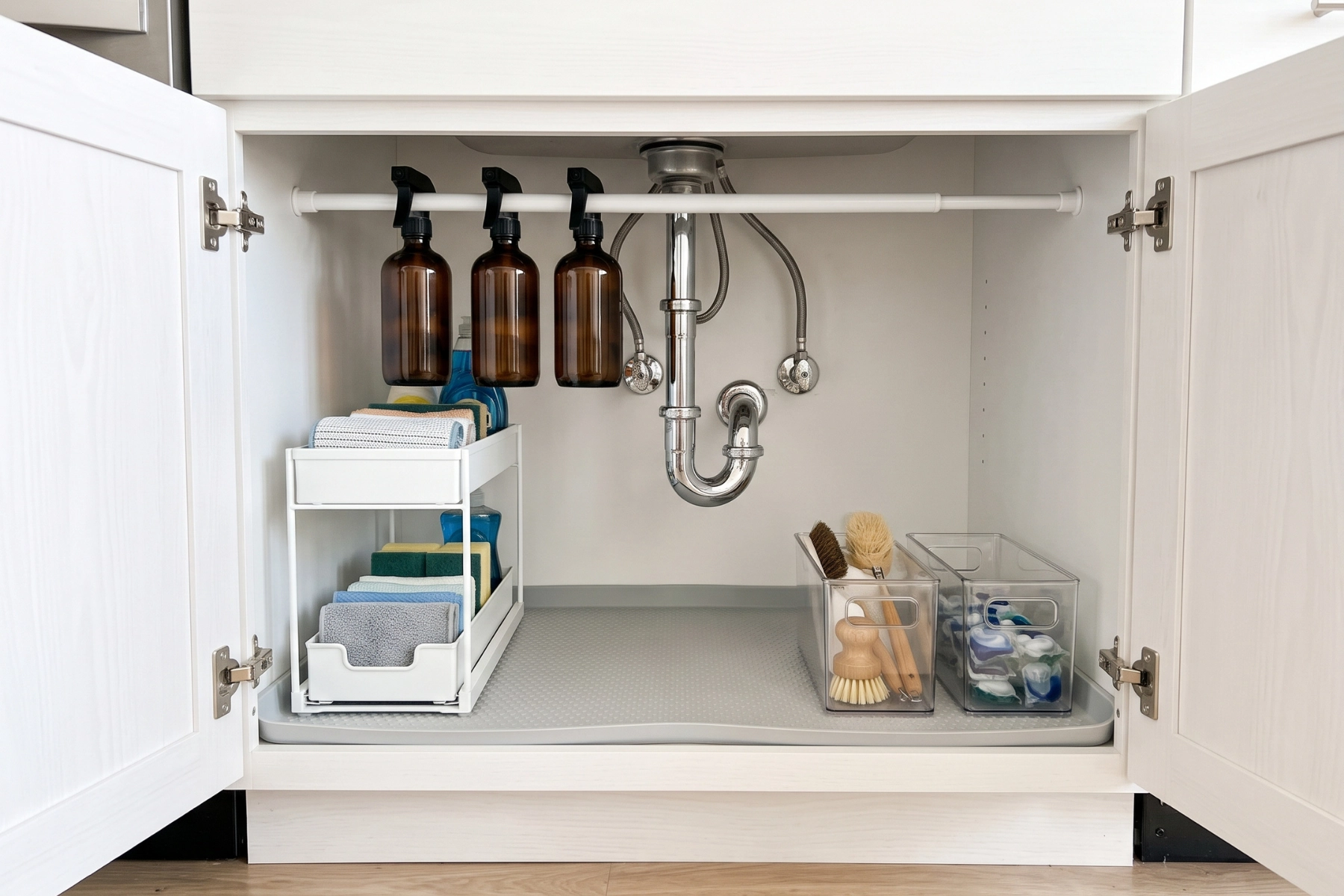
The cabinet under the sink is awkward by design. There's a drain pipe in the middle, supply lines on the sides, and a floor that can get wet. So it usually ends up as a jumble of half-empty bottles, sponges, and bags you have to dig through on hands and knees.
The fix isn't a bigger cabinet. It's storage that works around the plumbing instead of fighting it. These seven under-sink organization ideas work in kitchen and bathroom cabinets alike, need no drilling, and use the cabinet's height, its door, and a few simple bins to make the space easy to use every day.
1.Empty It, Clean It, and Check for Leaks First
 Save
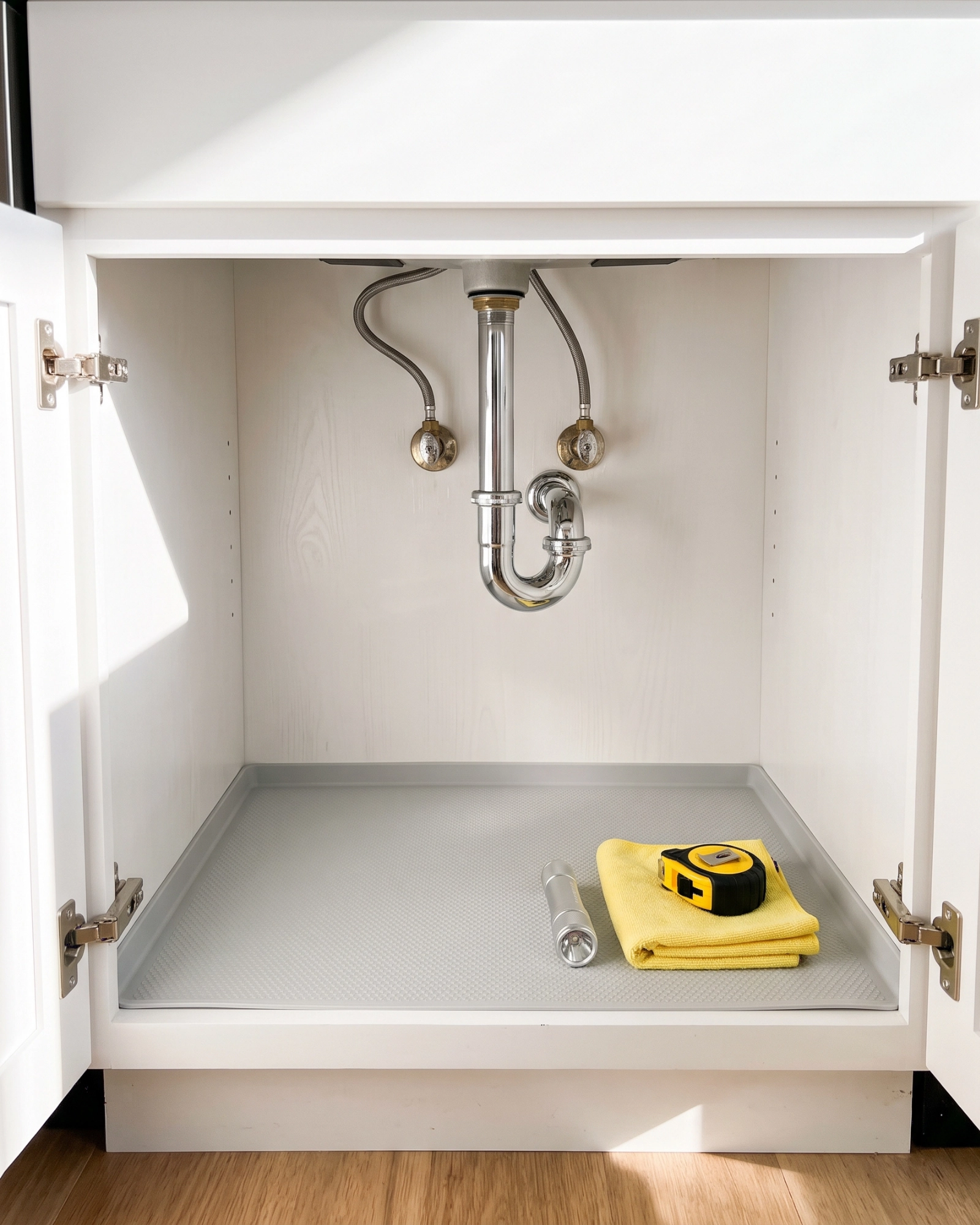
Take everything out before you buy a single organizer. Wipe the cabinet floor, let it dry, and shine a flashlight on the pipes and shut-off valves to check for drips, water stains, or soft spots in the wood.
This is also your chance to edit. Recombine duplicate bottles, recycle empties, and move anything you rarely use somewhere else. Then measure the open space on both sides of the drain pipe, because those measurements decide which organizers will actually fit.
2.Line the Cabinet Floor With a Waterproof Under-Sink Mat
 Save
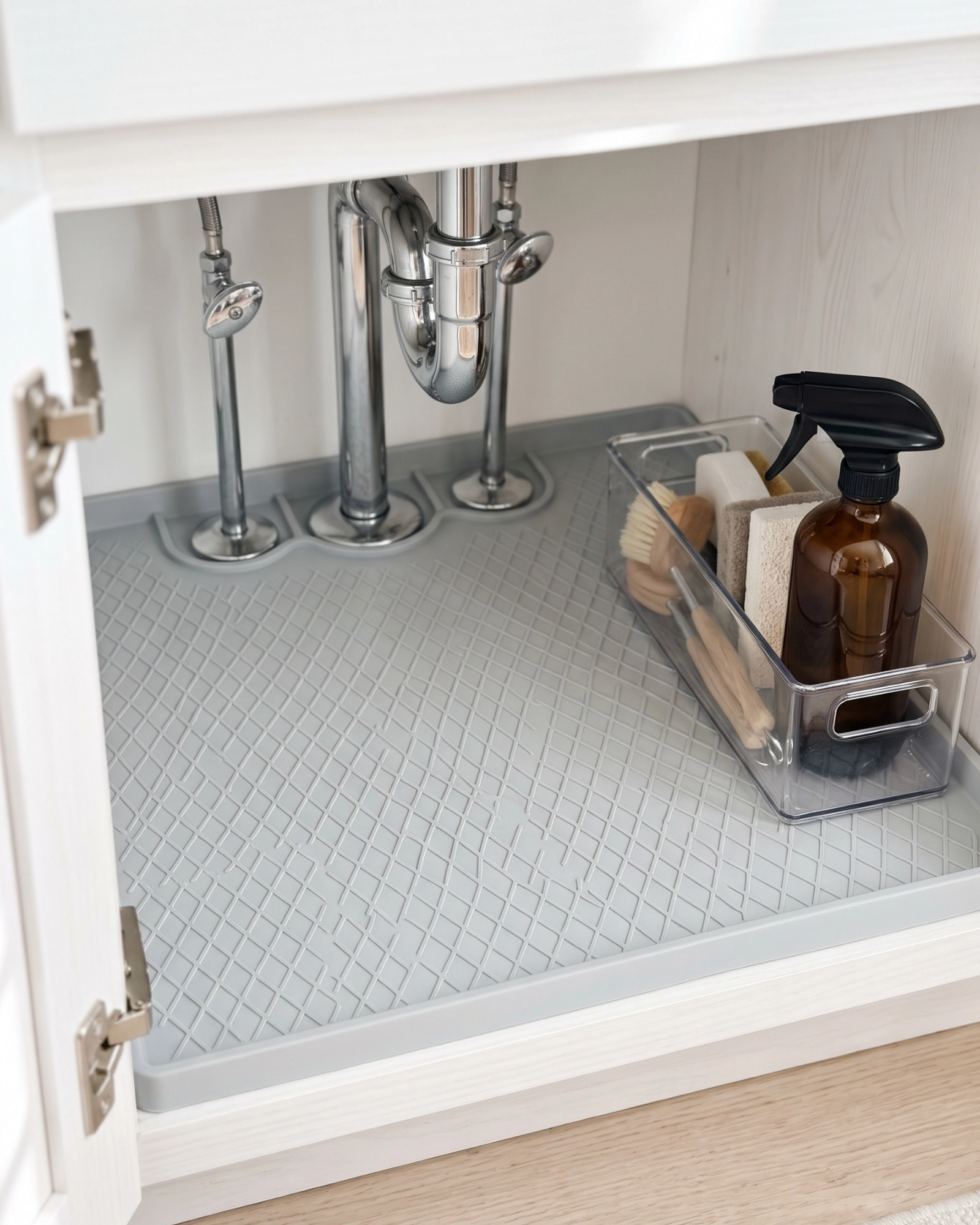
A silicone under-sink mat with raised edges protects the cabinet floor from spills and slow drips. It's especially useful in rentals, where water damage to the cabinet base can be expensive.
Most mats can be trimmed to fit and lifted out to rinse in the sink. A light color makes it easier to notice a new leak, since a puddle on a pale mat stands out right away.
3.Use a Two-Tier Under-Sink Organizer That Fits Around the Pipe
 Save
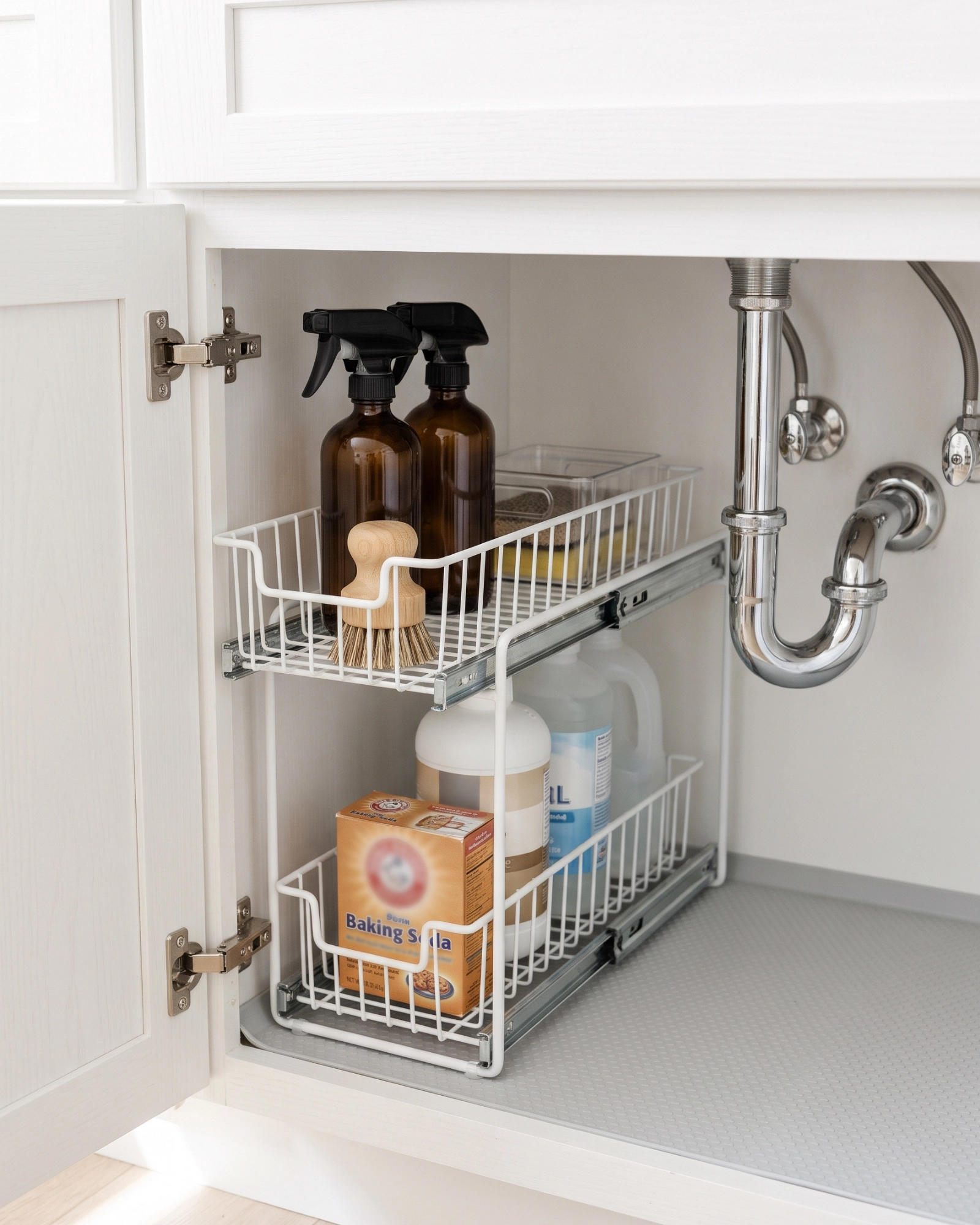
Most of the height in a sink cabinet goes to waste. A two-tier organizer, ideally one with pull-out drawers, gives you a second level and lets you slide items out instead of reaching to the back.
Look for adjustable or U-shaped designs made to sit around plumbing, or use two narrow units, one on each side of the drain. Compare the measurements from step one with the product dimensions, including the height of the top tier.
4.Hang Spray Bottles on a Tension Rod
 Save
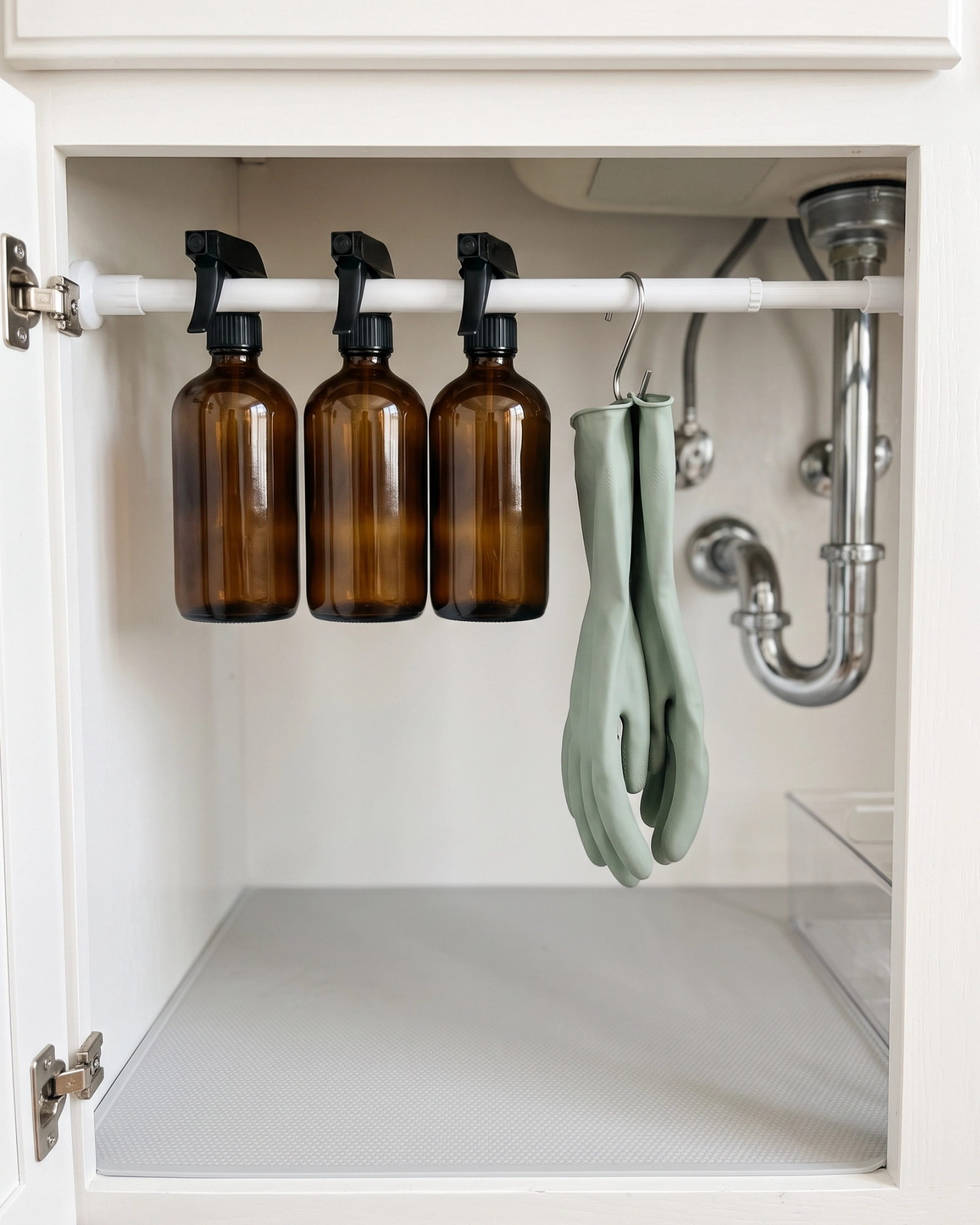
A small tension rod fitted across the upper part of the cabinet lets you hang spray bottles by their triggers. It frees up floor space and puts your most-used cleaners right at the front.
Fit the rod snugly between the side walls, above the height of the bins below and clear of the pipes. It holds lightweight spray bottles well. Keep heavy jugs on the cabinet floor instead.
5.Corral Sponges and Pods in Clear Bins With Handles
 Save
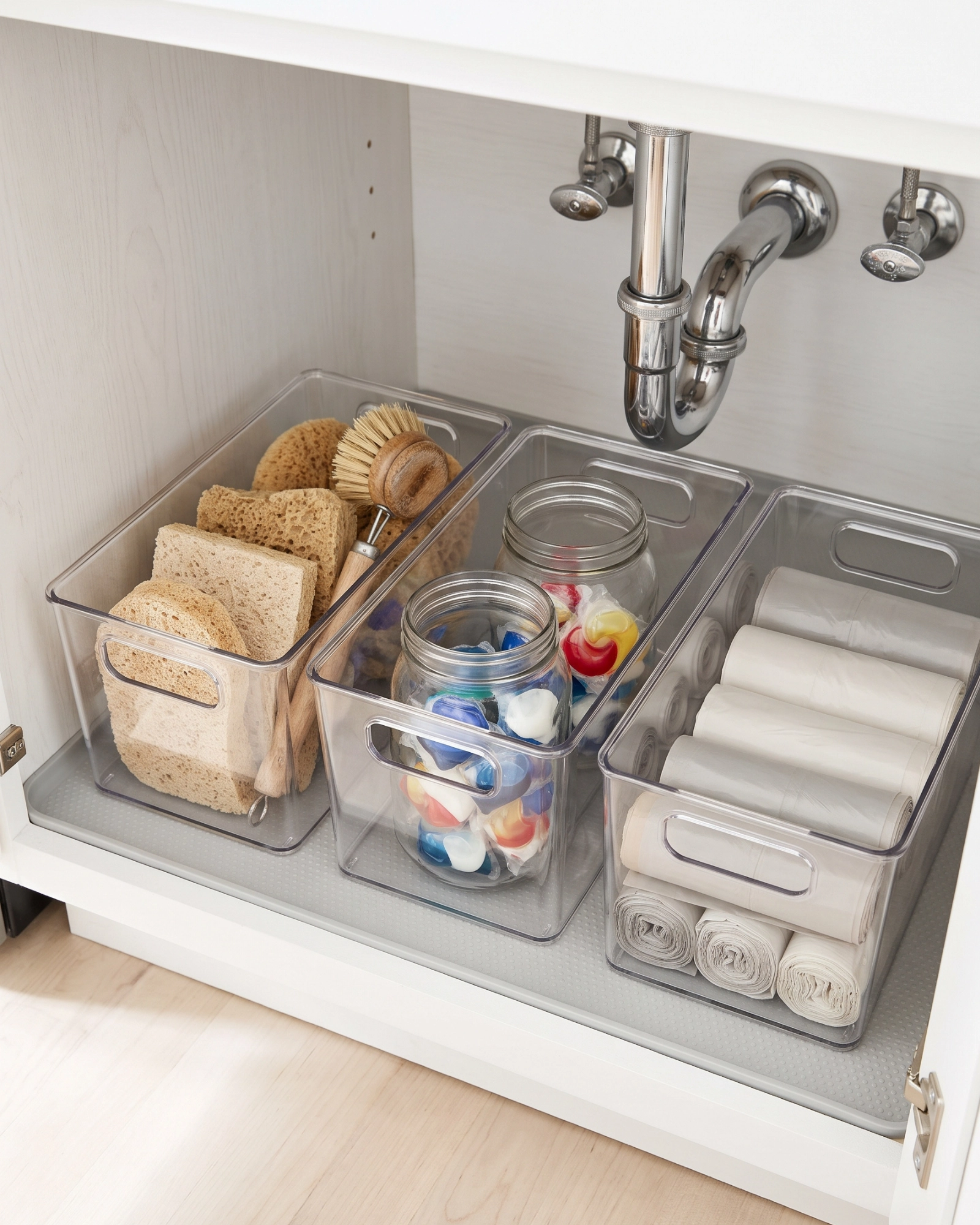
Sponges, scrubbers, dishwasher pods, and spare trash bags are what usually make this cabinet feel chaotic. Give each group its own clear bin with a handle so you can pull the whole bin out at once.
Clear bins show you when supplies are running low, which saves buying doubles. Narrow bins fit the side spaces next to the pipe that bigger organizers can't use. The same handled bins work on deep pantry shelves too, as in these small pantry organization ideas.
6.Use the Inside of the Cabinet Door
 Save
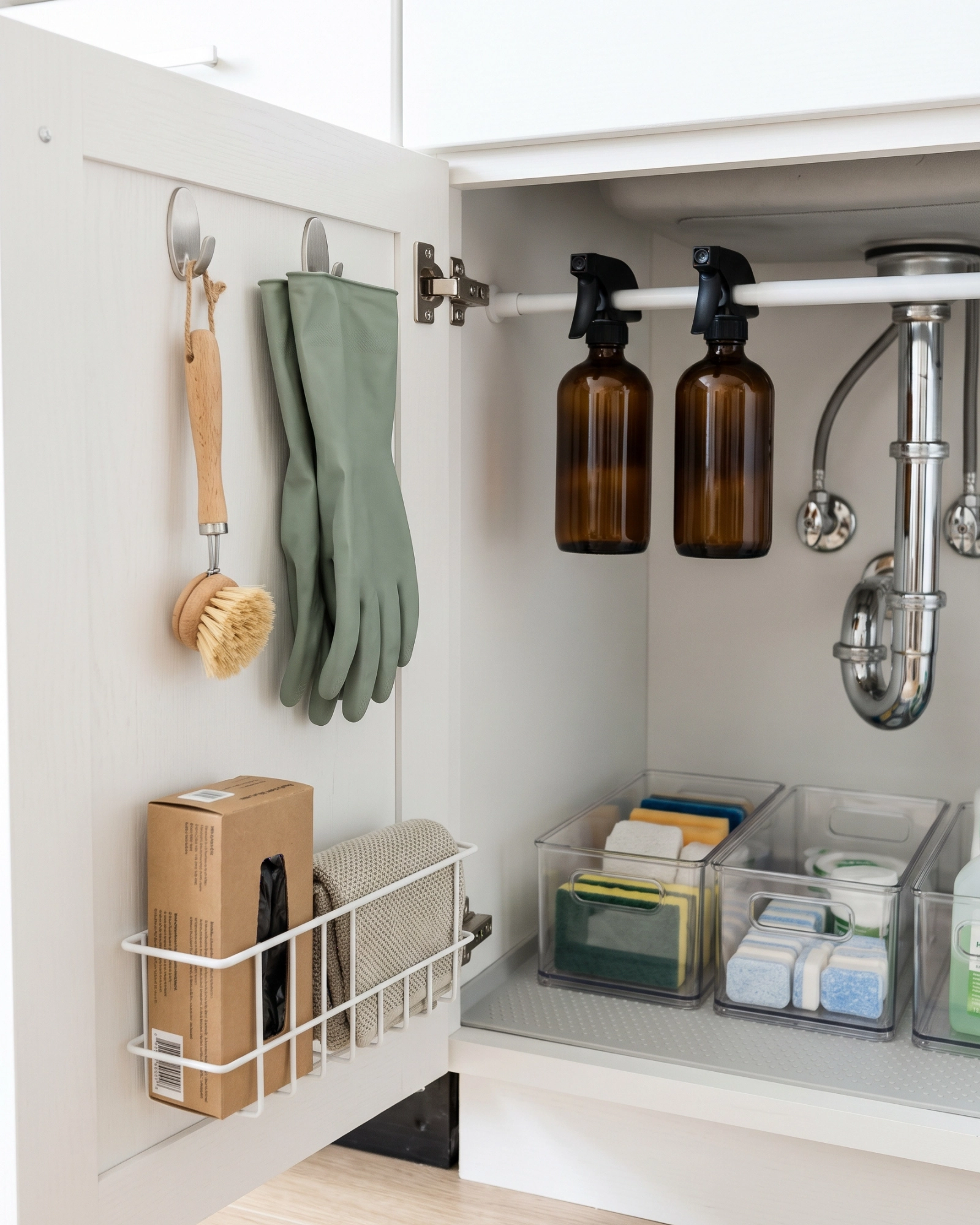
The inside of the cabinet door can hold a slim caddy, a few adhesive hooks, or a small bag holder. It's a good spot for lightweight items like dish brushes, gloves, or a roll of compostable bags.
Open and close the door slowly before you load it up, to make sure nothing hits the pipes, the sink basin, or the organizers inside. Choose removable adhesive hooks that are rated for the weight you'll hang.
7.Store Cleaning Products Safely Under the Sink
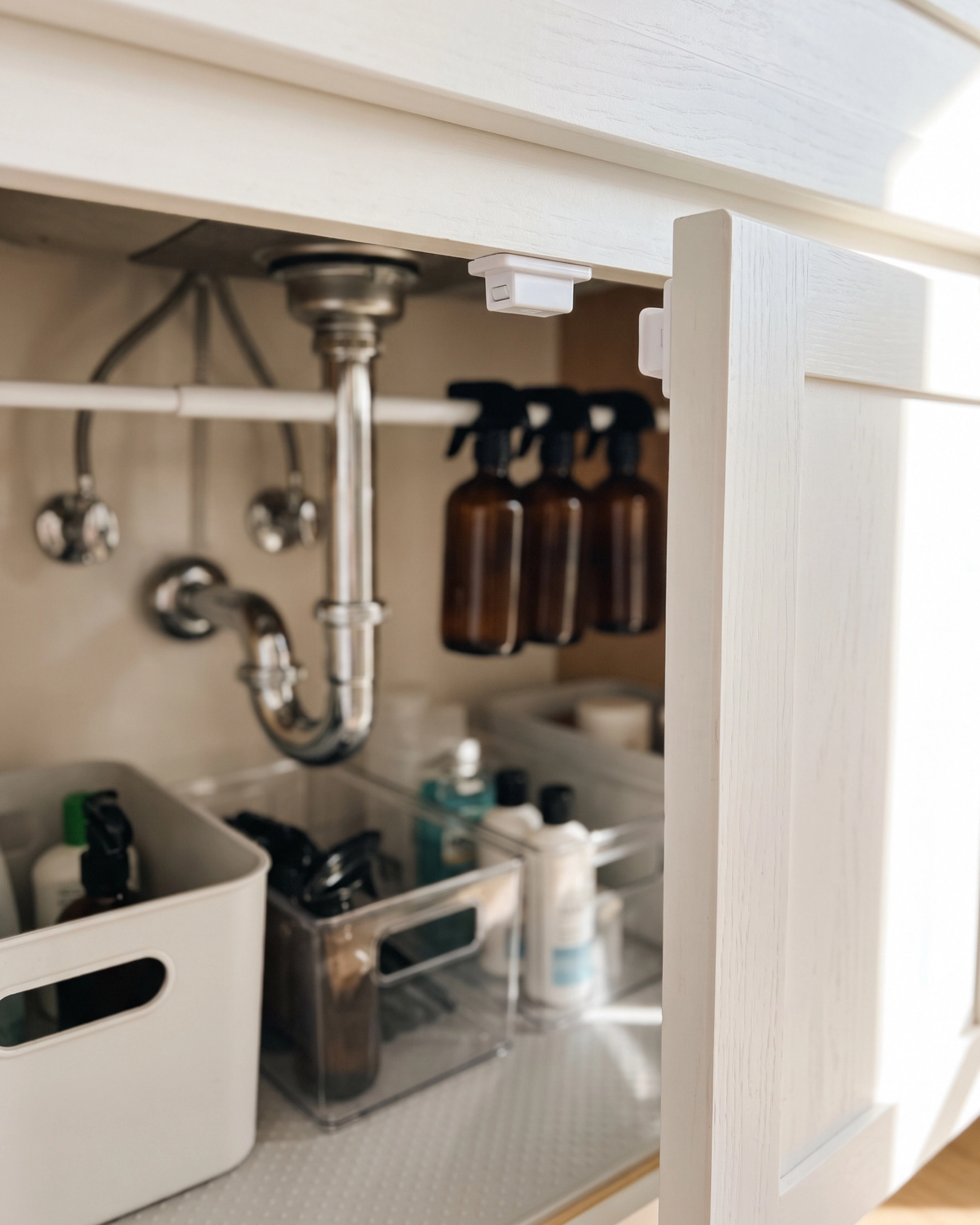 Save
Under-sink cabinets are where many families keep cleaning products, so safety belongs in the plan. If young children or pets live or visit, add a child safety latch, many of which install with adhesive and come off cleanly later.
Keep products in their original labeled containers, store bleach separately from ammonia-based and acidic cleaners, and never mix cleaning products, since some combinations release harmful gases. Store anything flammable away from heat.
Kitchen vs. Bathroom Sink: What to Store Where
Under the kitchen sink, keep what you use at the sink: dish soap refills, dishwasher pods, sponges, a few everyday cleaners, trash bags, and rubber gloves. Under the bathroom sink, keep bathroom cleaners, spare toilet paper, extra toiletries, and a small caddy you can carry to the tub.
In both, keep the area around the pipes clear so you can spot a leak, and skip anything that would be ruined by a drip, like paper documents or extra linens. Check the cabinet when you do your weekly reset, and run the dishwasher before bed as part of a 15-minute evening reset so the sink area starts each day clear.
Frequently Asked Questions
How do you organize under a sink with pipes?
Measure the space on each side of the drain, then use organizers built to work around plumbing: a U-shaped or adjustable two-tier unit, or two narrow units, one on each side. Use the upper space with a tension rod and the door with a slim caddy.
What should you not store under the kitchen sink?
Avoid storing food, paper goods you'd hate to lose to a leak, and anything flammable near a heat source. If children or pets live or visit, add a safety latch or move cleaning products up high.
How do I protect the cabinet under my sink from water damage?
Line the floor with a silicone mat with raised edges, keep the area around the pipes clear, and glance under the sink once a week. A pale mat makes a new drip easy to see.
How do you organize under a bathroom sink?
Use the same approach as the kitchen: a two-tier organizer beside the pipe, clear bins for small toiletries, and the door for a slim caddy or hooks. Keep backups and refills on the bottom tier and daily items in front.
Is it safe to keep cleaning products under the sink?
It can be, as long as they stay in their original labeled containers, incompatible products like bleach and ammonia are stored apart, and the cabinet has a child safety latch if young children are around. Keep the Poison Control number handy (1-800-222-1222 in the U.S.).