 Chloe
If your small pantry fills up after one grocery run, the problem usually isn't space. It's visibility. Cereal boxes block the back of every shelf, cans hide behind other cans, and three open bags of pasta end up in the same cupboard because nobody could see the first two.
These seven small pantry organization ideas work for a narrow pantry closet, a deep corner cupboard, or a single kitchen cabinet. Most cost under $20, none need drilling, and you can set everything up in an afternoon. Work through them in order: clear it out first, then add storage, then make it easy to keep up.
1.Declutter Your Pantry and Sort Food by Meal Type
 Save
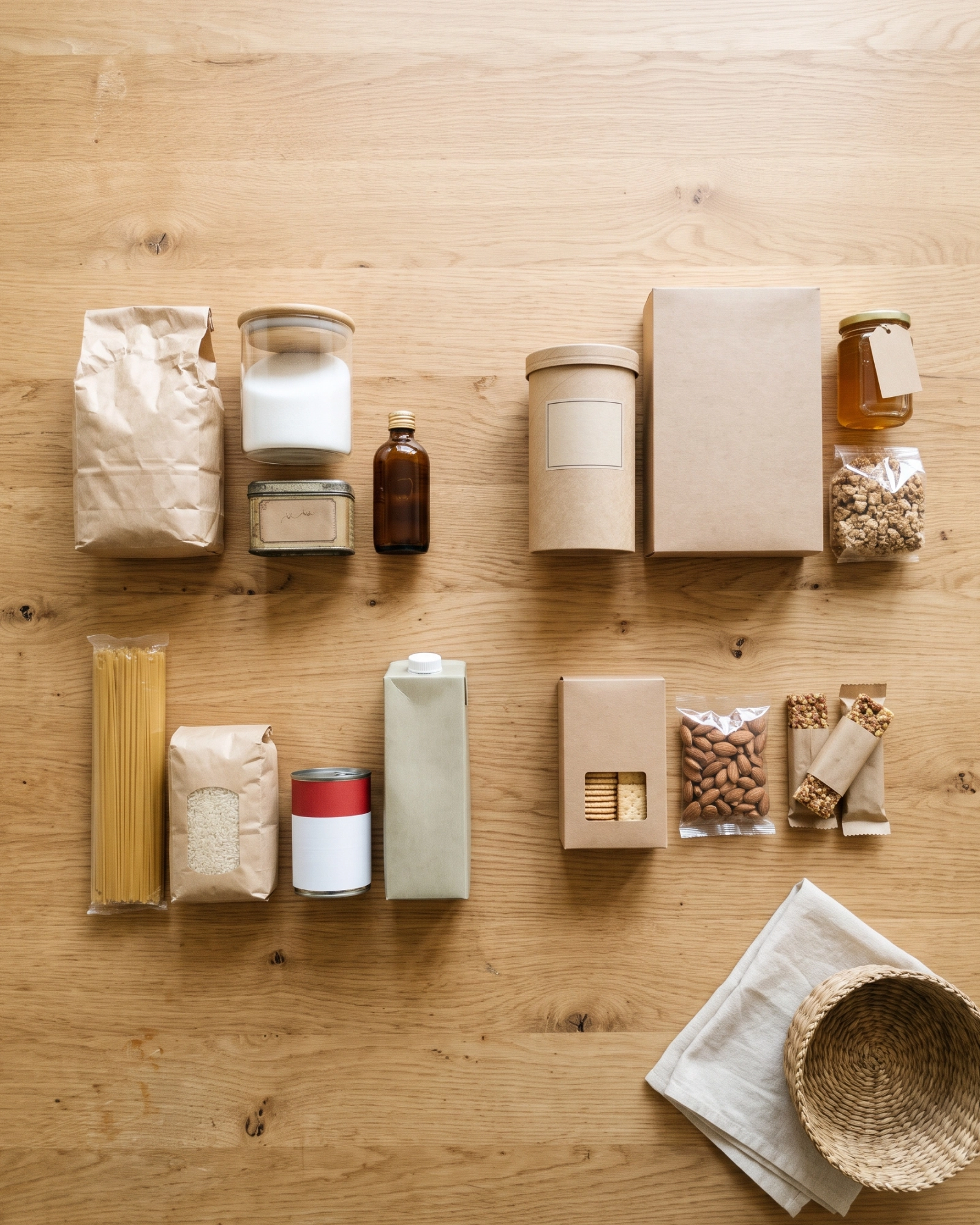
Start by taking everything out of the pantry and putting it on the counter or kitchen table. Check the dates, toss anything expired or stale, combine duplicate open packages, and set aside unopened food you won't use for a local food bank. Emptying the shelves completely is the only way to see how much room you really have.
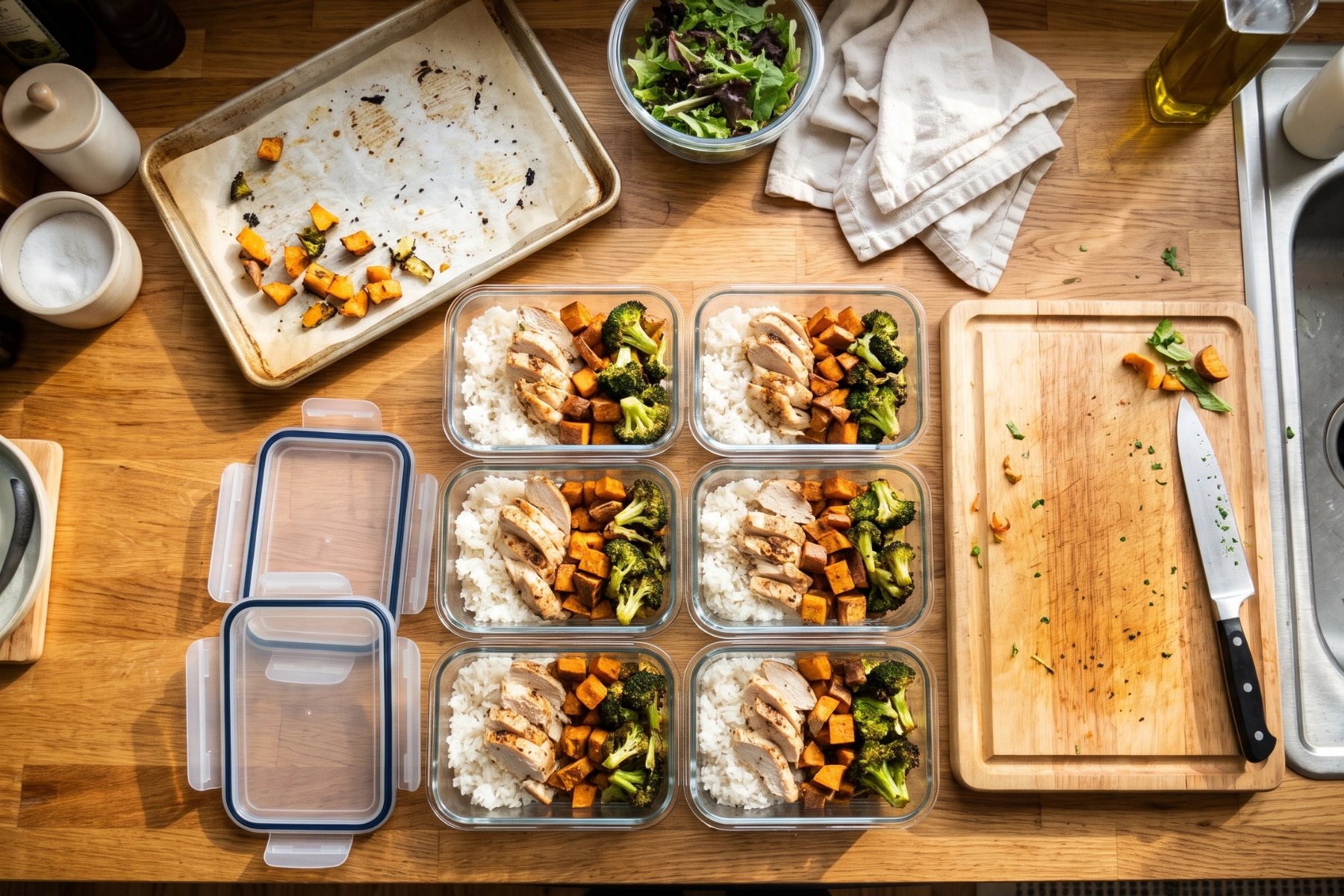
Then group what's left by how you use it, not by what it is: breakfast, dinner staples, baking, snacks, and drinks. When everything for one kind of meal lives together, you can spot what you're out of in seconds, and cooking starts at one shelf instead of a search. It also makes Sunday meal prep much faster.
2.Decant Everyday Staples Into Clear, Square Containers
 Save
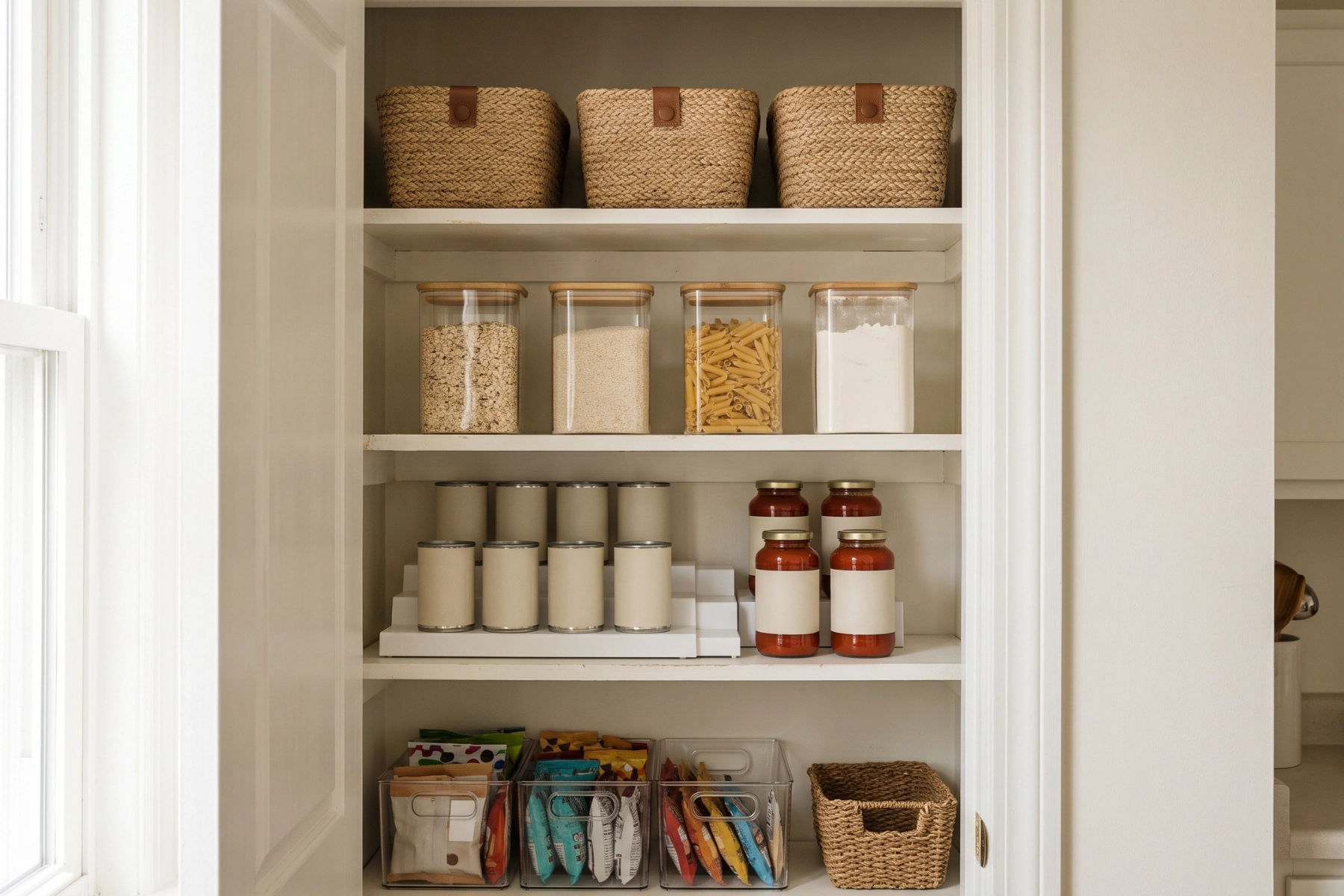
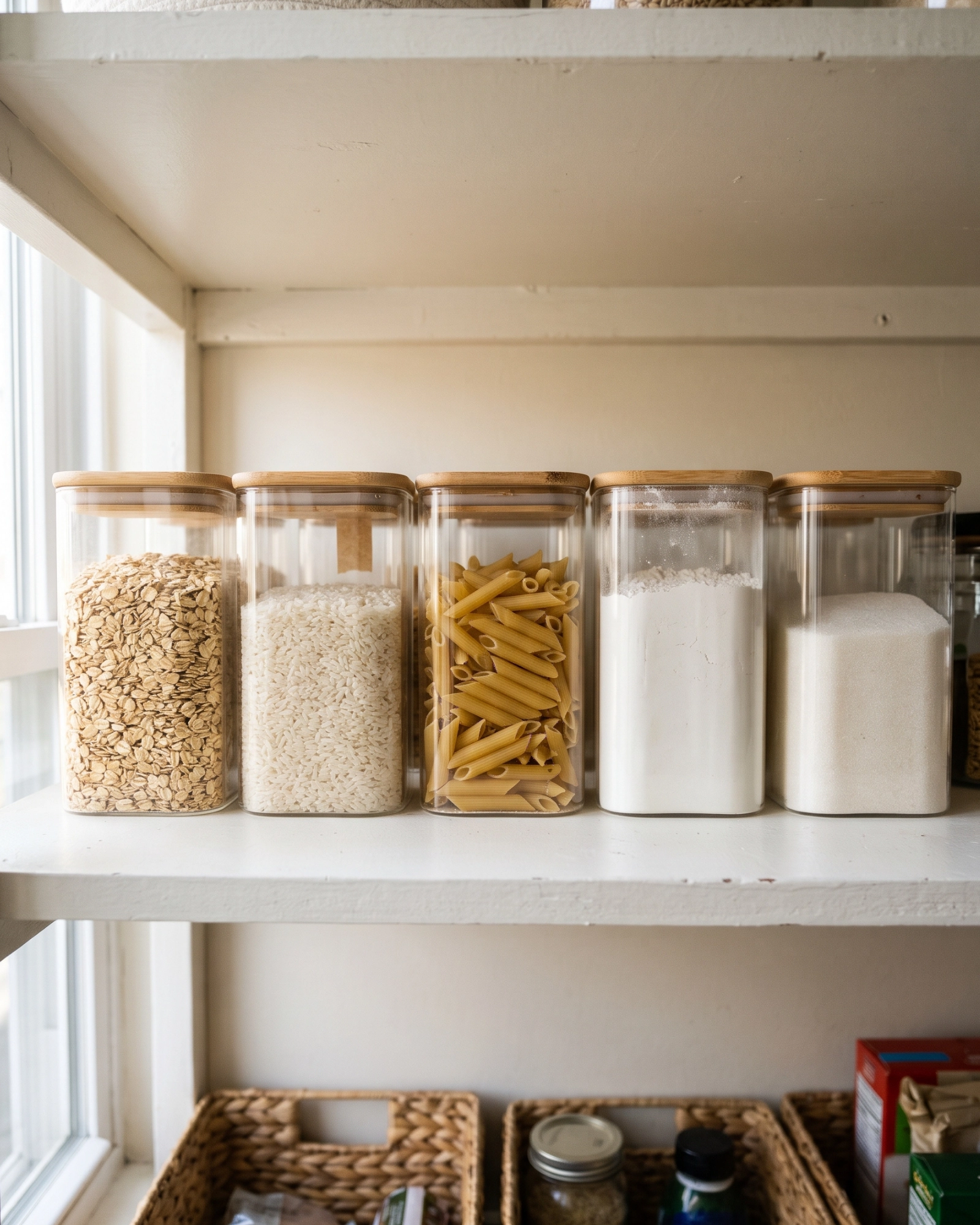
Clear containers make it easy to see when you're running low, but you don't need to decant everything. Pick the four or five staples you reach for every week, like oats, rice, pasta, flour, and sugar, and give only those a container. Everything else can stay in its original box or bag, grouped in a bin.
Choose square or rectangular containers over round ones. They sit flush against each other with no wasted gaps, so more fits on a small shelf. Dollar stores and thrift stores often have simple glass or plastic canisters for a few dollars each, which keeps this idea well under $20.
3.Use a Tiered Shelf Riser So You Can See Every Can
 Save
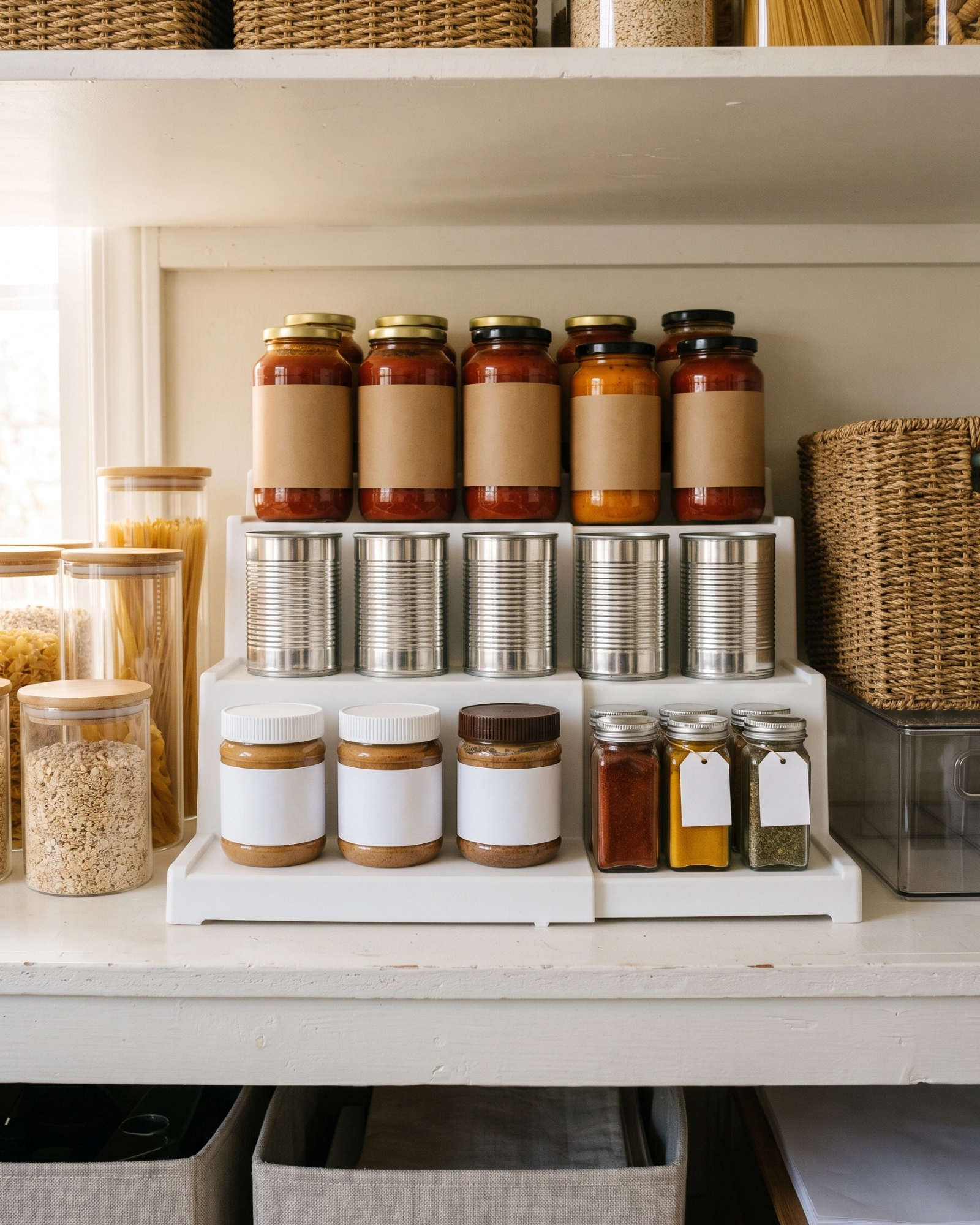
Cans lined up in rows hide each other, so the ones in the back get forgotten and bought again. A tiered shelf riser lifts each row a little higher than the one in front, like stadium seating, and you can read every label at a glance.
Expandable risers usually cost $10 to $20 and adjust to the width of your shelf. Use one for canned goods and another for jars of sauces, nut butters, or spices. They work just as well in a regular kitchen cabinet if you don't have a pantry at all.
4.Turn Deep Pantry Shelves Into Pull-Out Drawers With Bins
 Save
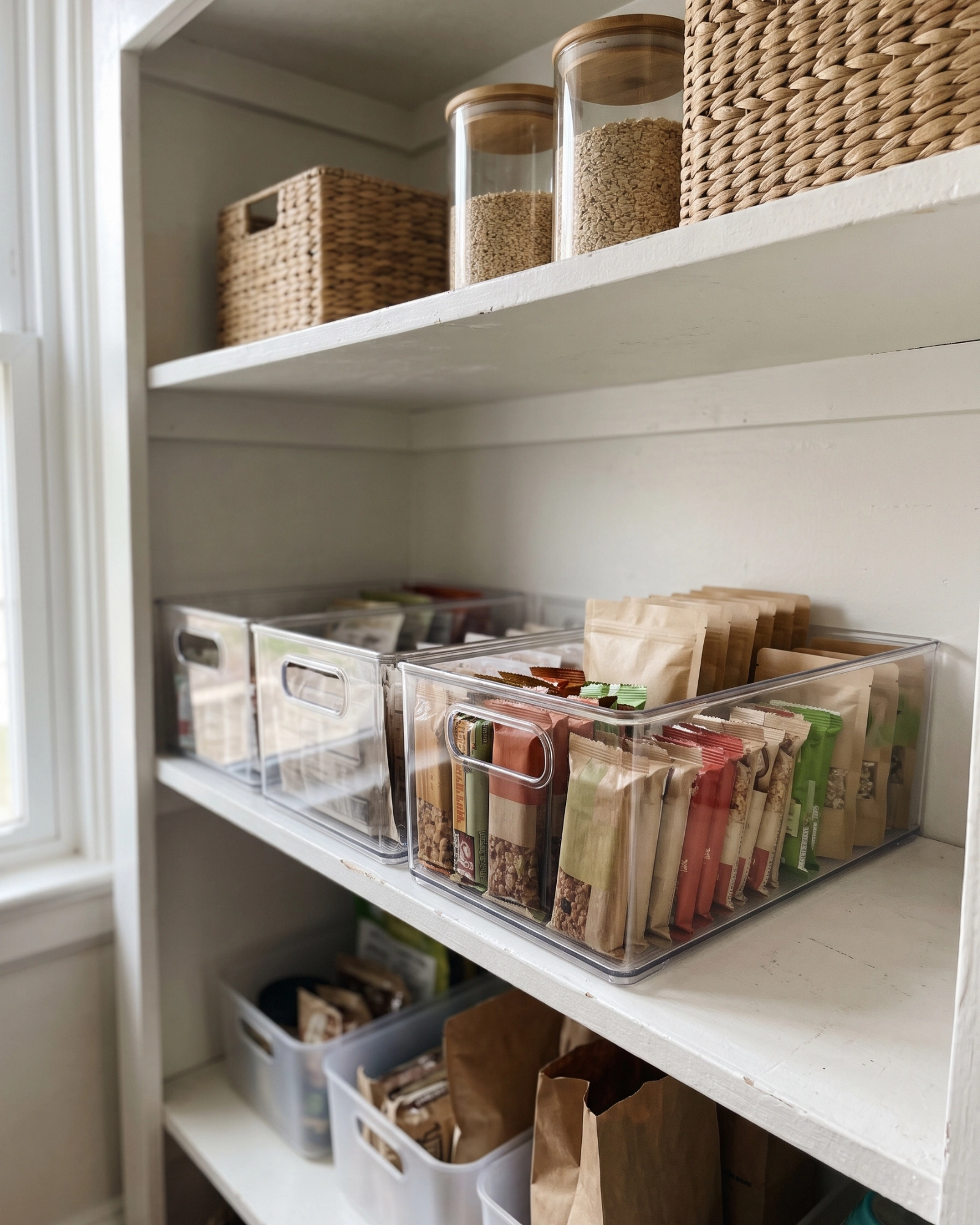
Deep shelves are where food goes to be forgotten. Instead of stacking items three rows deep, put them in a long bin that runs front to back, and pull the whole bin out like a drawer when you need something from the back.
Clear bins with a handle on the front work best because you can see what's inside without lifting them down. Use them for loose packets, snack bars, sauce mixes, tea, and anything else that tips over. Bins in this style often cost $5 to $10 each.
5.Add an Over-the-Door Pantry Rack for Spices and Small Jars
 Save
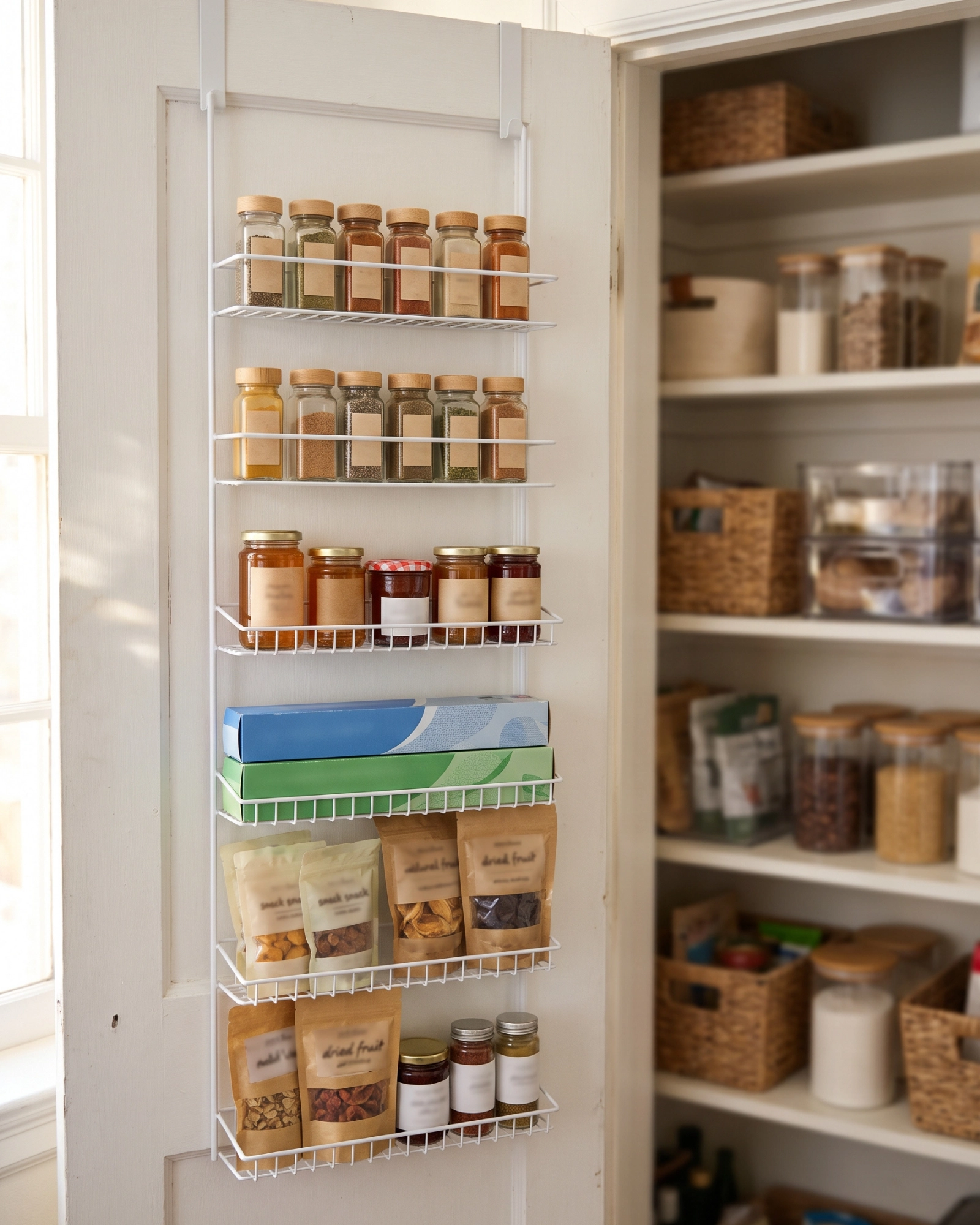
The back of the pantry door is usually wasted space. An over-the-door pantry rack hangs on hooks, with no drilling, and gives you several shallow shelves for spices, small jars, foil, plastic wrap, and snack packets. It's one of the best small pantry storage ideas for renters.
This is one of the pricier ideas on the list, often $25 to $40, but it can free up an entire shelf inside the pantry. Check that your door still closes with the hooks in place before you load it up, and look for a rack with a lip on each shelf so jars don't slide off.
6.Label Pantry Shelves by Zone So Everything Goes Back
 Save
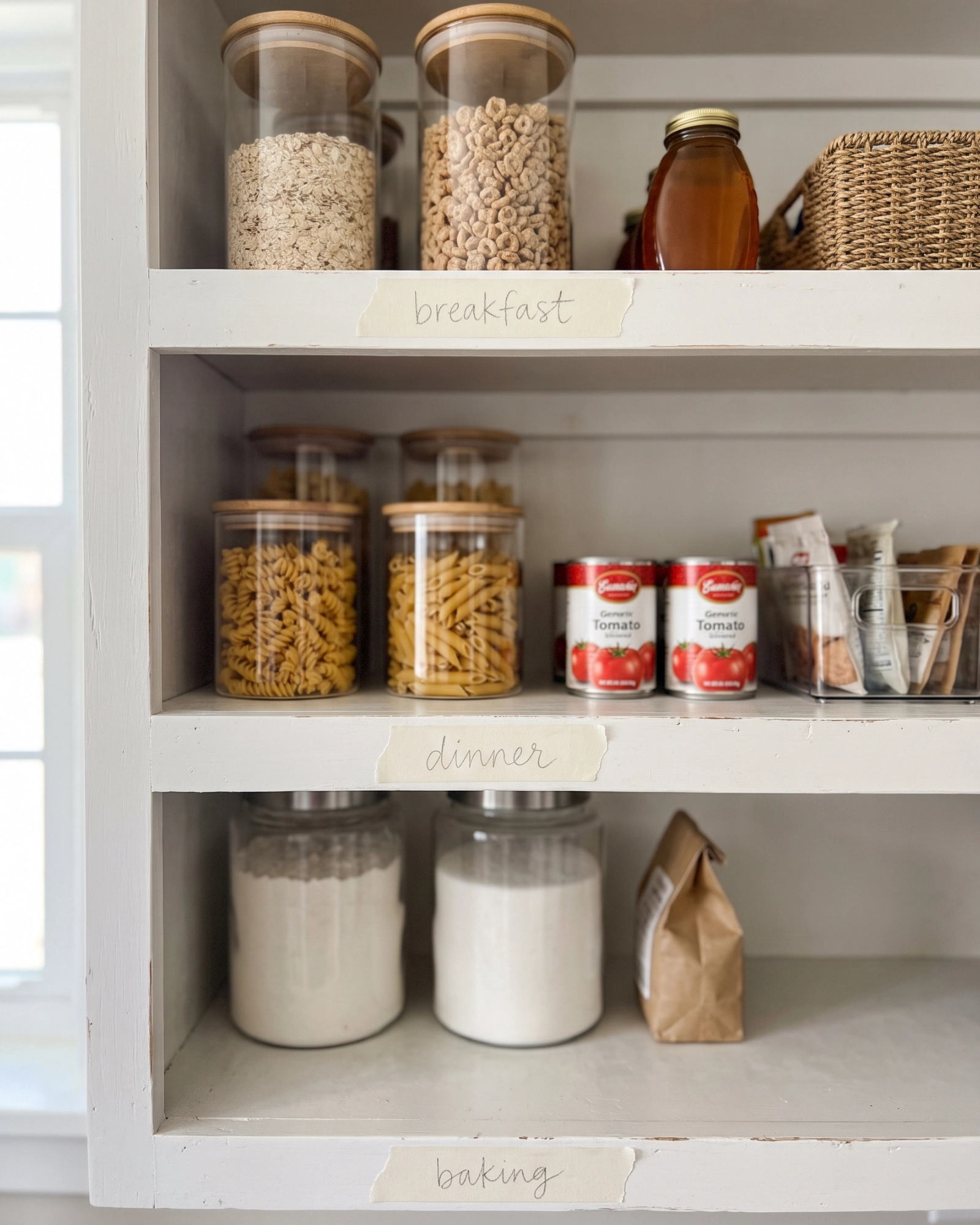
Labels on jars tell you what's inside. Labels on the shelf edge tell everyone in the house where things go back, and that's what keeps a pantry organized after the first week.
Keep the zones broad: breakfast, dinner, baking, snacks. A strip of painter's tape and a marker works fine and peels off cleanly, which makes it a good choice for renters. Put the foods you use most between waist and eye level, and save the top shelf for extras and holiday baking.
7.Keep a "Use First" Bin to Cut Food Waste
 Save
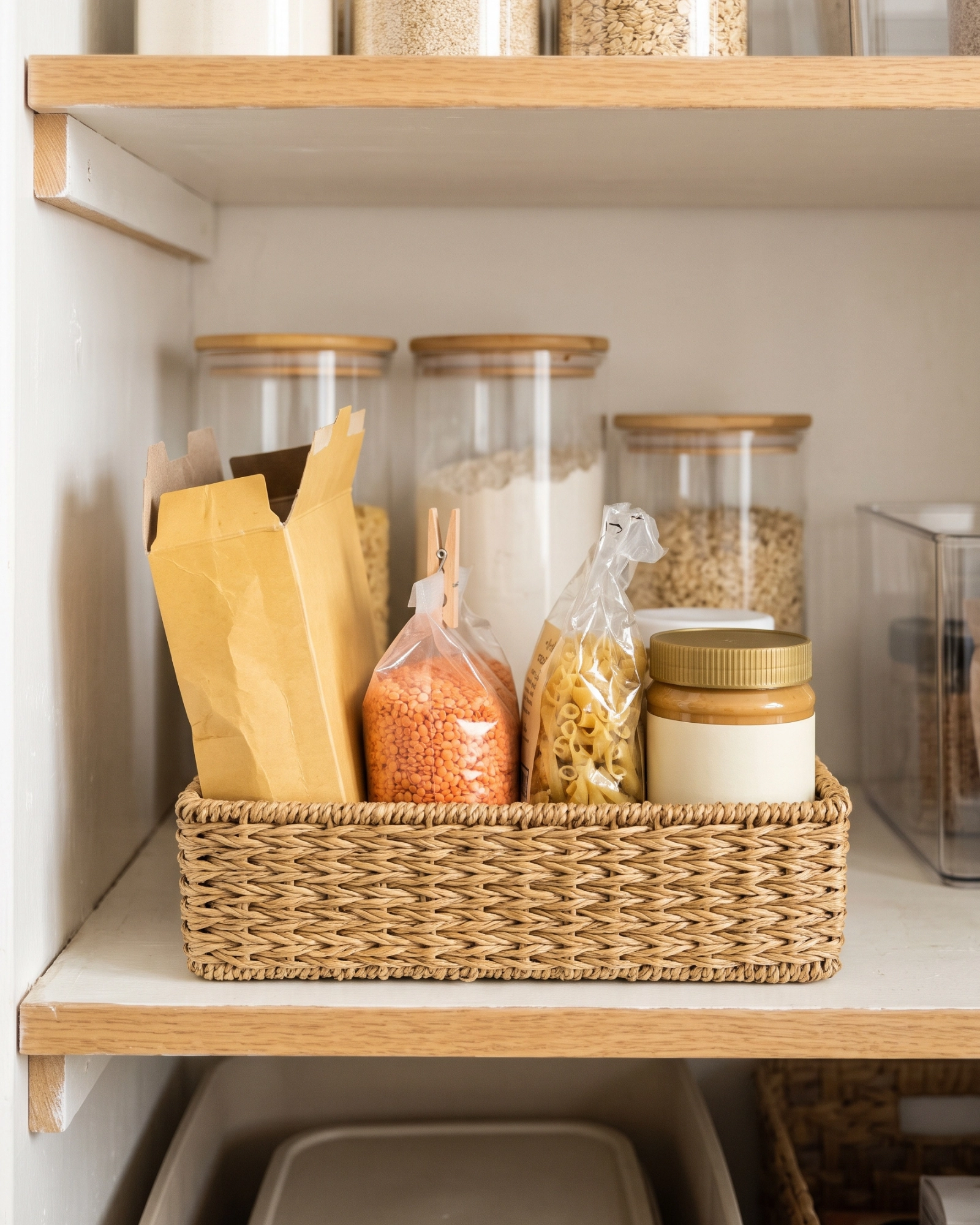
Pick one small basket and put it at the front of an easy-to-reach shelf. Anything opened, nearly finished, or close to its best-by date goes in it.
When you plan meals or grab a snack, check this bin first. It's a simple way to waste less food, and it shows you what to skip buying on your next grocery trip. Half-used bags of lentils, beans, and pasta are perfect for easy one-pot soups.
How to Keep a Small Pantry Organized
An organized pantry stays that way with a few minutes of upkeep, not a monthly overhaul. Once a week, right before you write your grocery list, put stray items back in their zones, refill your containers, and check the "use first" bin. Every three or four months, take everything out again for a quick reset.
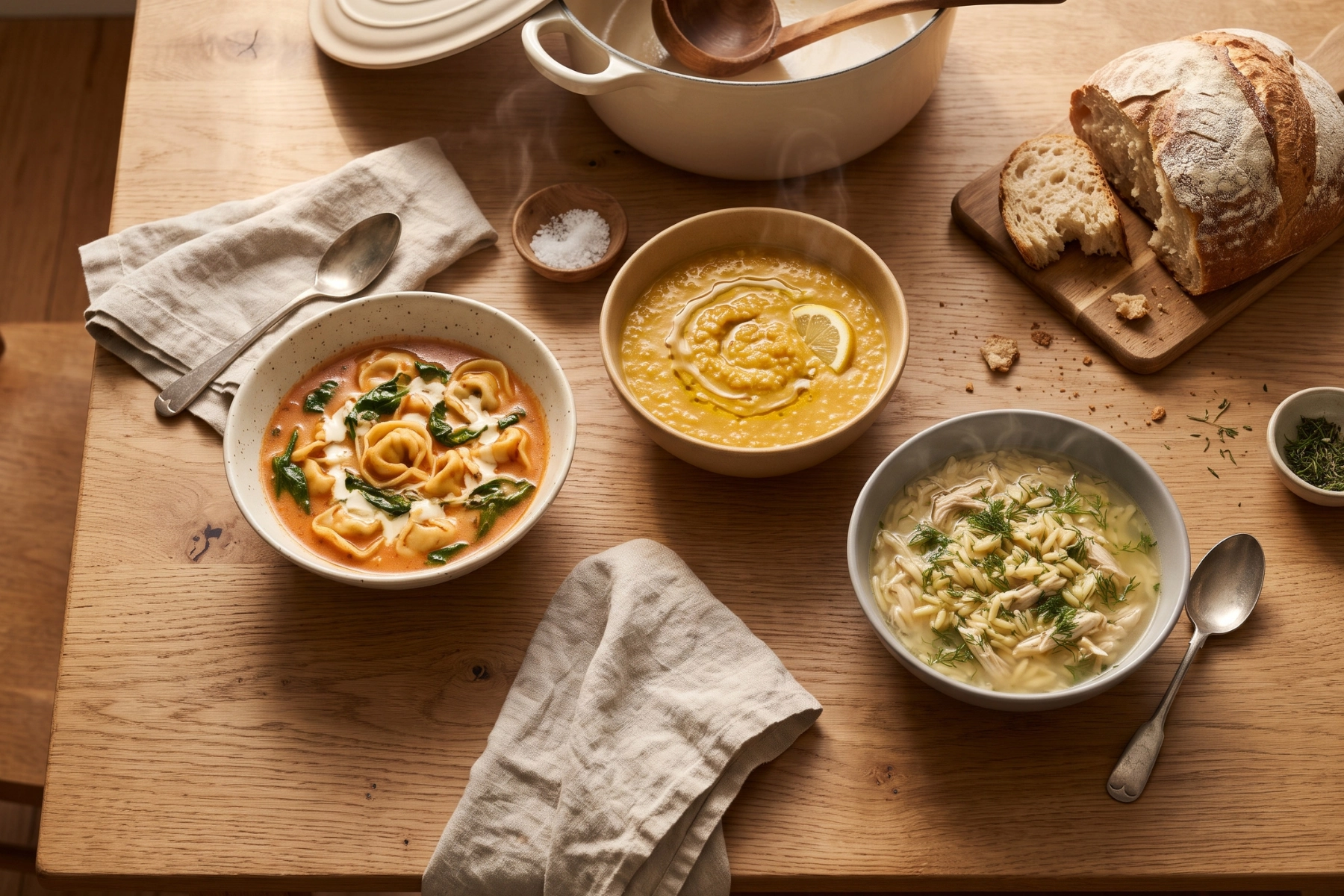
If you're restocking from scratch, start with the staples that turn into fast dinners: pasta, rice, canned tomatoes, beans, broth, and a few spices. They're the backbone of these 5-ingredient weeknight dinners, and they all fit neatly on one well-organized shelf.
Frequently Asked Questions
How do you organize a small pantry with deep shelves?
Use long bins that run from the front of the shelf to the back, and pull them out like drawers. Put a tiered riser on the shelf for cans so the back rows are raised and visible, and keep the items you use most at the front.
How can I organize my pantry on a budget?
Declutter first, because it costs nothing and often frees up the most space. Then add only what you need: a $10 to $20 shelf riser, a few dollar-store bins, and painter's tape labels. Decant just your weekly staples instead of buying a full set of containers.
How do you organize food if you don't have a pantry?
Choose one kitchen cabinet as your pantry and use the same ideas: a riser for cans, bins for small packets, and zones for breakfast, dinner, and snacks. A slim rolling cart beside the fridge or an over-the-door rack on a nearby door adds extra space without drilling.
Is it worth decanting pantry food into containers?
It's worth it for the few staples you use every week, because clear containers show when you're running low and keep food sealed. For everything else, grouping packages in bins is faster and cheaper. Always keep the best-by date with decanted food.
How often should you clean out your pantry?
A quick check once a week before grocery shopping keeps things tidy, and a full clear-out every three or four months catches expired food and spills. Wipe the shelves with a damp cloth while they're empty.