 Chloe
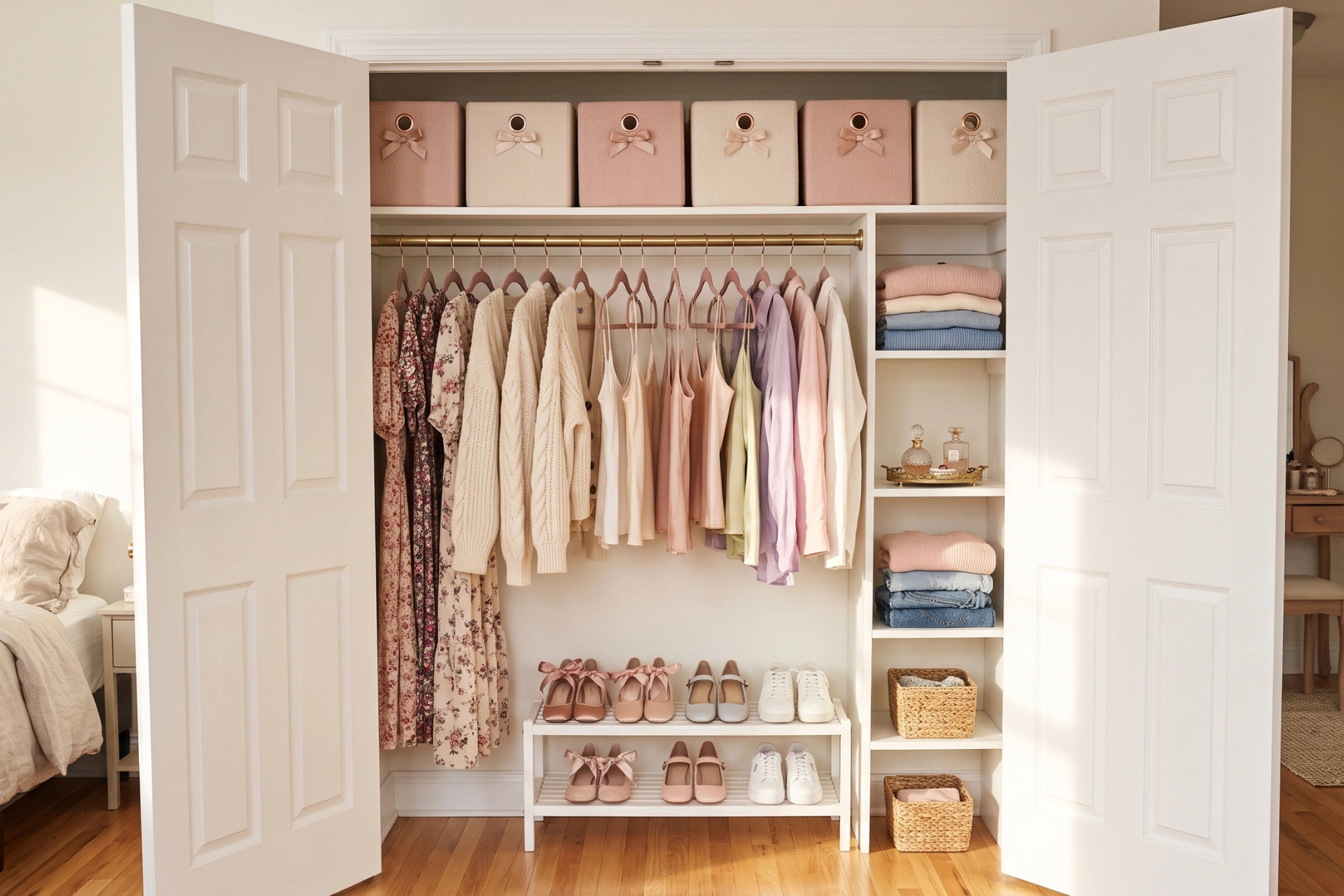
A small closet usually isn't short on space. It's short on a plan. Most reach-in closets have one hanging rod, one high shelf, and a floor that slowly fills with shoes and bags, which leaves the top third of the closet and the back of the door almost completely unused.
These seven small closet organization ideas put that wasted space to work with slim hangers, a second hanging rod, over-the-door storage, and simple labeled bins. None of them need tools, none of them will cost you your deposit, and most cost less than a takeout dinner.
1.Switch to Slim Velvet Hangers to Free Up Rod Space
 Save
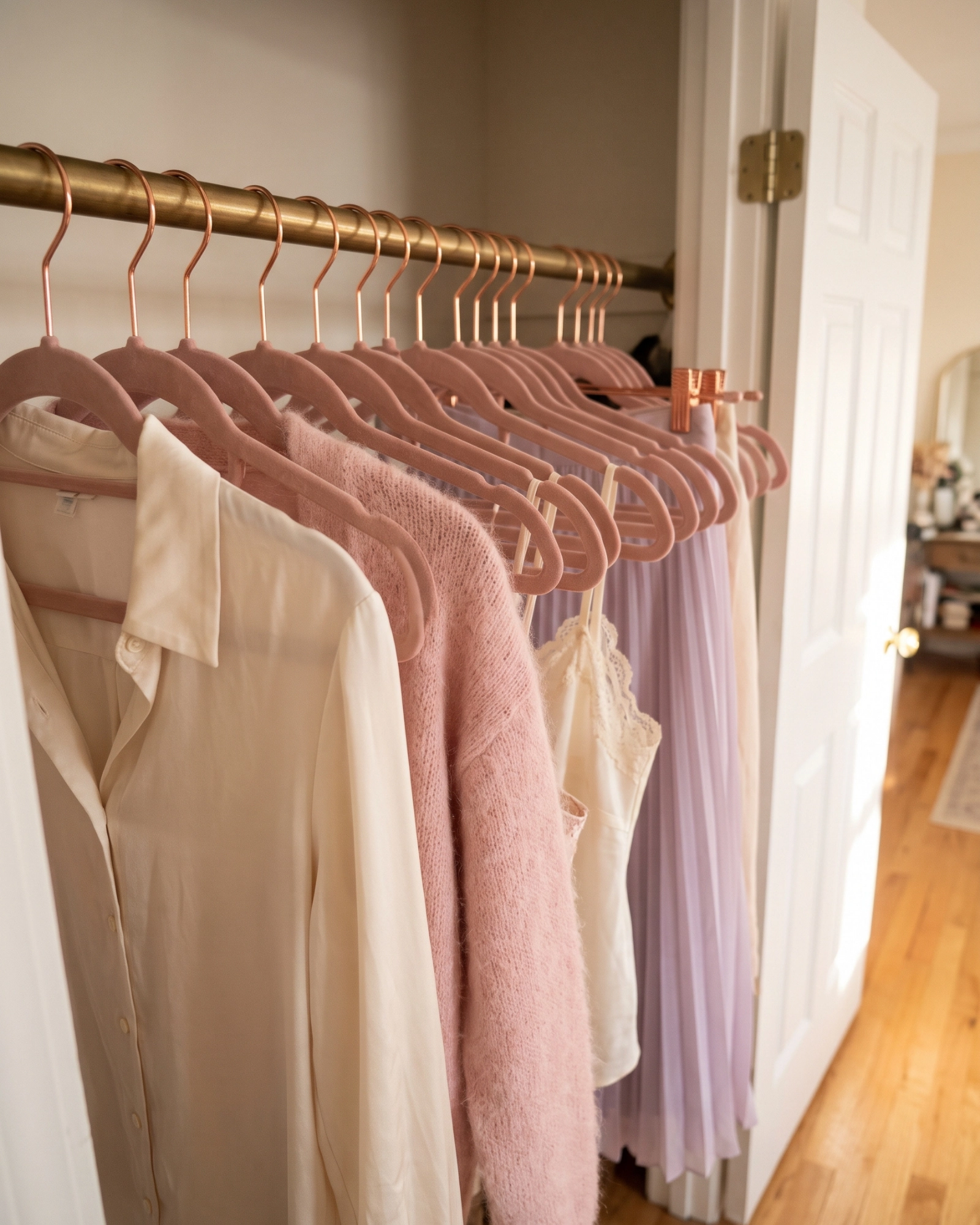
Chunky plastic and wooden hangers can take up close to twice the rod space of slim velvet ones. Swapping a whole rod to matching slim hangers is one of the fastest ways to free up room, and the velvet grip keeps silky tops and wide-neck sweaters from sliding onto the floor.
Change the whole rod in one go instead of a few hangers at a time. A matching row is also easier to scan, so you see more of what you own and reach for it more often. Packs of 50 are widely available and usually cost less than $20.
2.Add a Closet Rod Extender to Double Your Hanging Space
 Save
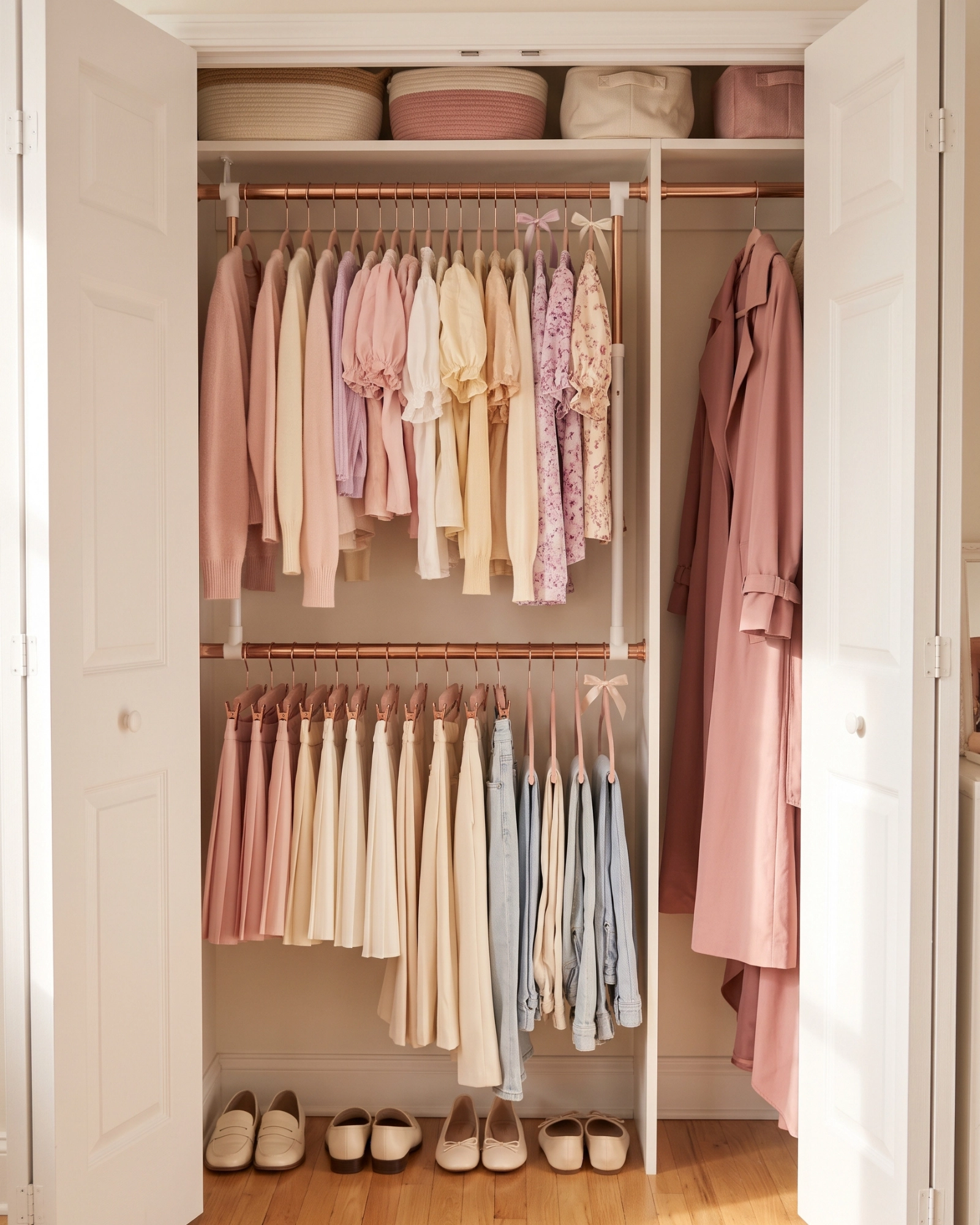
If your closet has one high rod, the space below your shirts is often empty air. A double-rod extender hooks over the existing rod and hangs a second rod below it, which instantly doubles your short hanging space with no tools at all.
It's ideal for shirts, skirts, folded trousers, and kids' clothes. Leave one section of the original rod free for long dresses and coats, and check the weight rating before you load it with heavy jackets.
3.Use an Over-the-Door Organizer for Shoes and Accessories
 Save
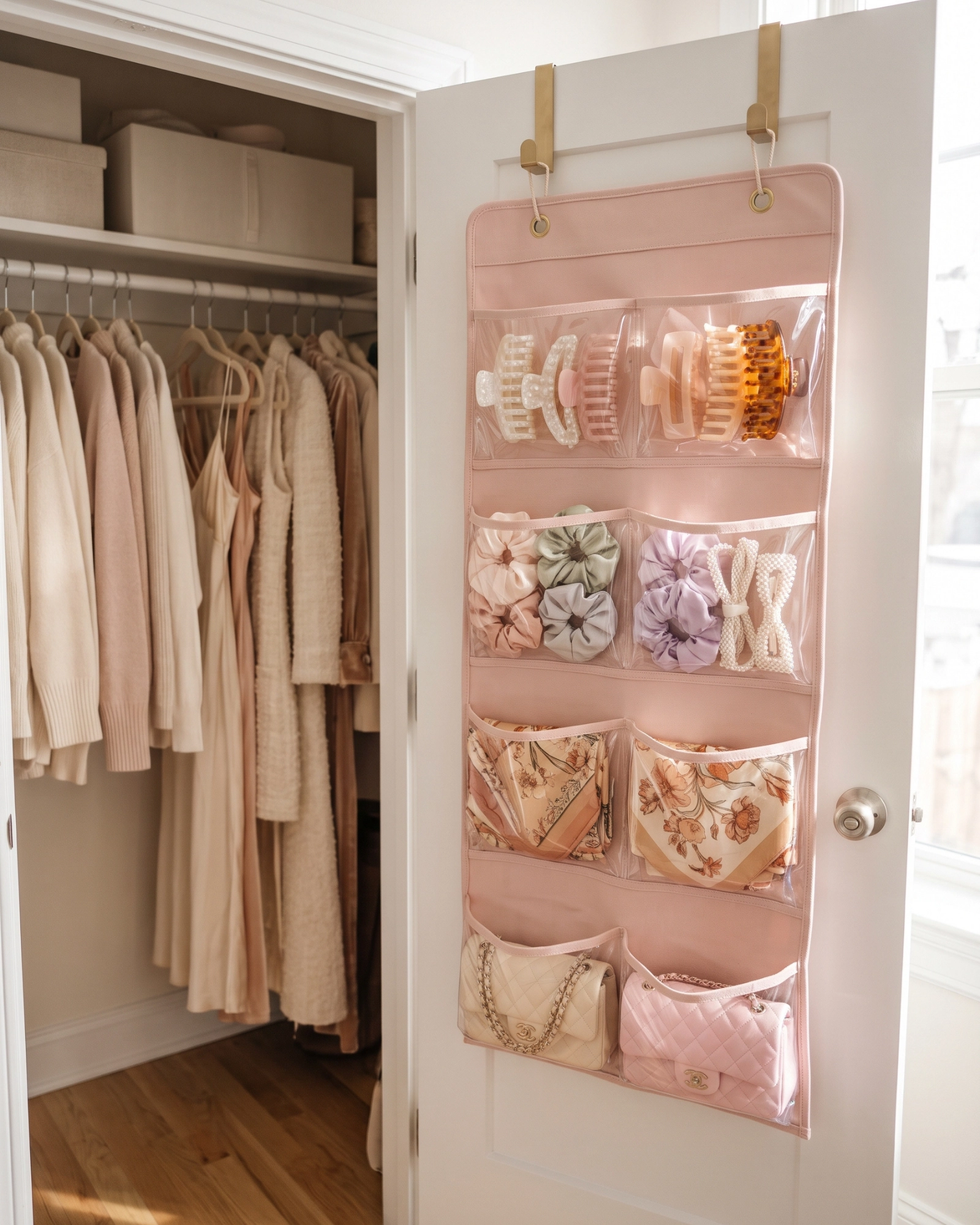
The back of the closet door is one of the biggest unused surfaces in a small bedroom. An over-the-door organizer with clear pockets hangs on the top edge of the door and holds shoes, scarves, belts, tights, or small bags you'd otherwise pile on a shelf.
Clear pockets matter more than you'd think: you can see everything at a glance, so the organizer actually gets used. Before you buy, close the door with the organizer on it to make sure it still latches and doesn't hit the clothes inside.
4.Turn the Top Shelf Into Labeled Storage Bins
 Save
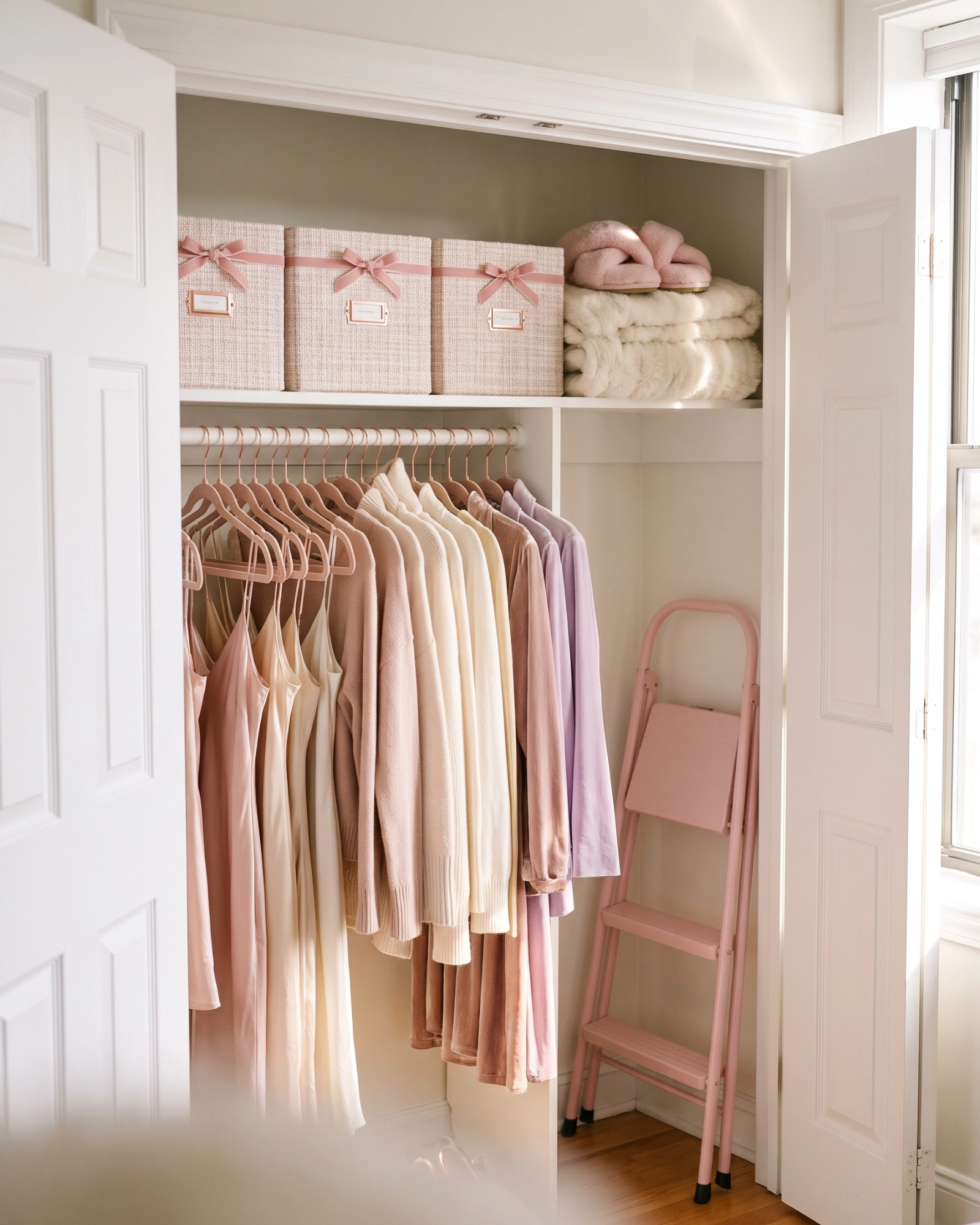
A high shelf piled with loose items quickly becomes a place things go to be forgotten. Matching fabric or plastic bins turn it into real storage: one bin for off-season clothes, one for spare bedding, one for bags, and so on.
Choose bins with a front handle so you can pull them down easily, and measure the shelf depth before buying so they don't stick out. Labels are the step most people skip, and the one that keeps the system working, because you'll know what's inside without pulling every bin down.
5.Add Shelf Dividers to Stop Sweater Avalanches
 Save
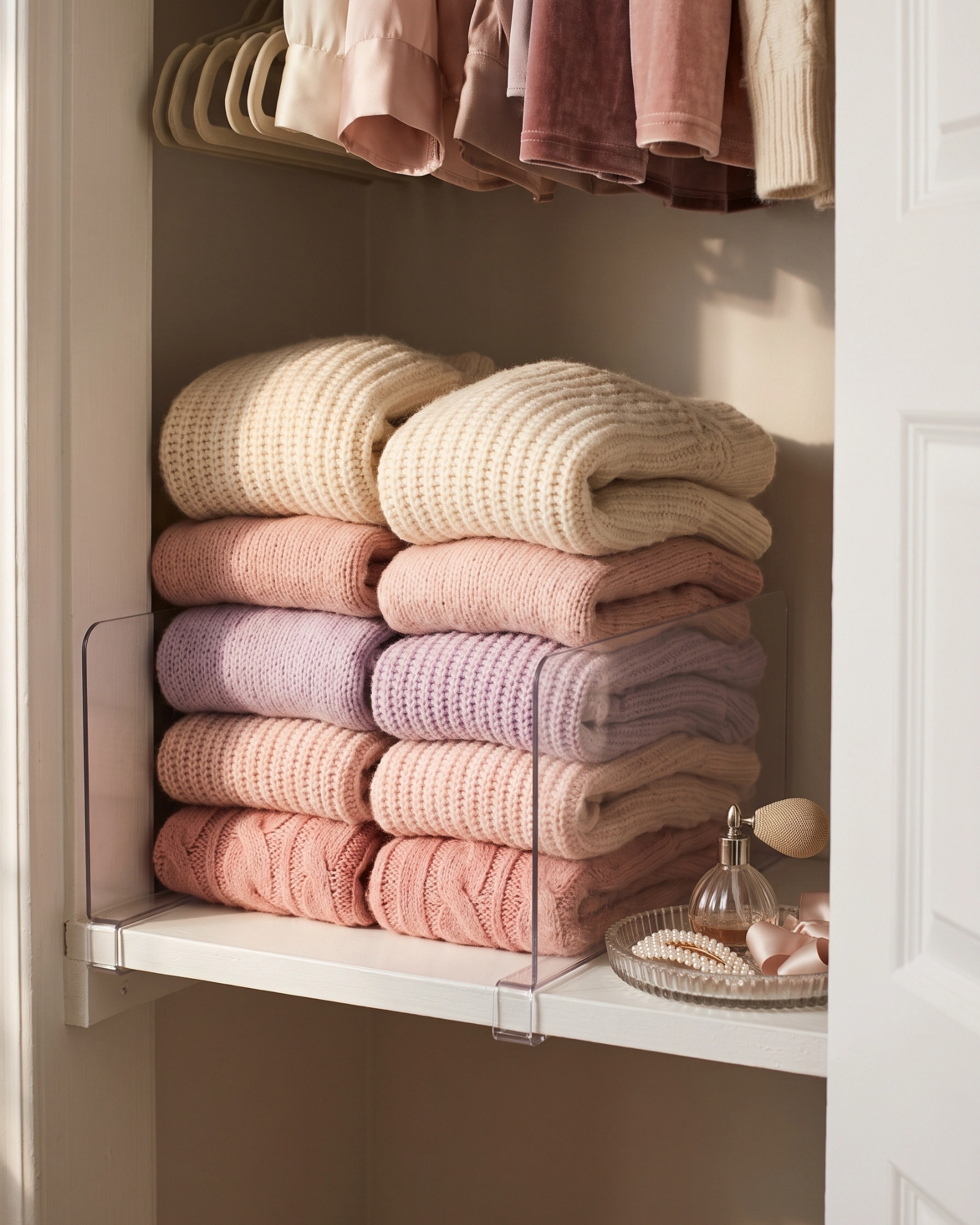
Folded sweaters and jeans tend to slump into each other until one tall stack collapses every time you pull something out. Clip-on shelf dividers slide onto the edge of a wooden or wire shelf and keep each stack standing on its own.
Keep stacks to about five or six items so you can grab the bottom one without unfolding the rest. Group by type, such as jeans, knits, and lounge sets, so getting dressed takes one look instead of a search.
6.Use Cascading Hangers for Pants and Tank Tops
 Save
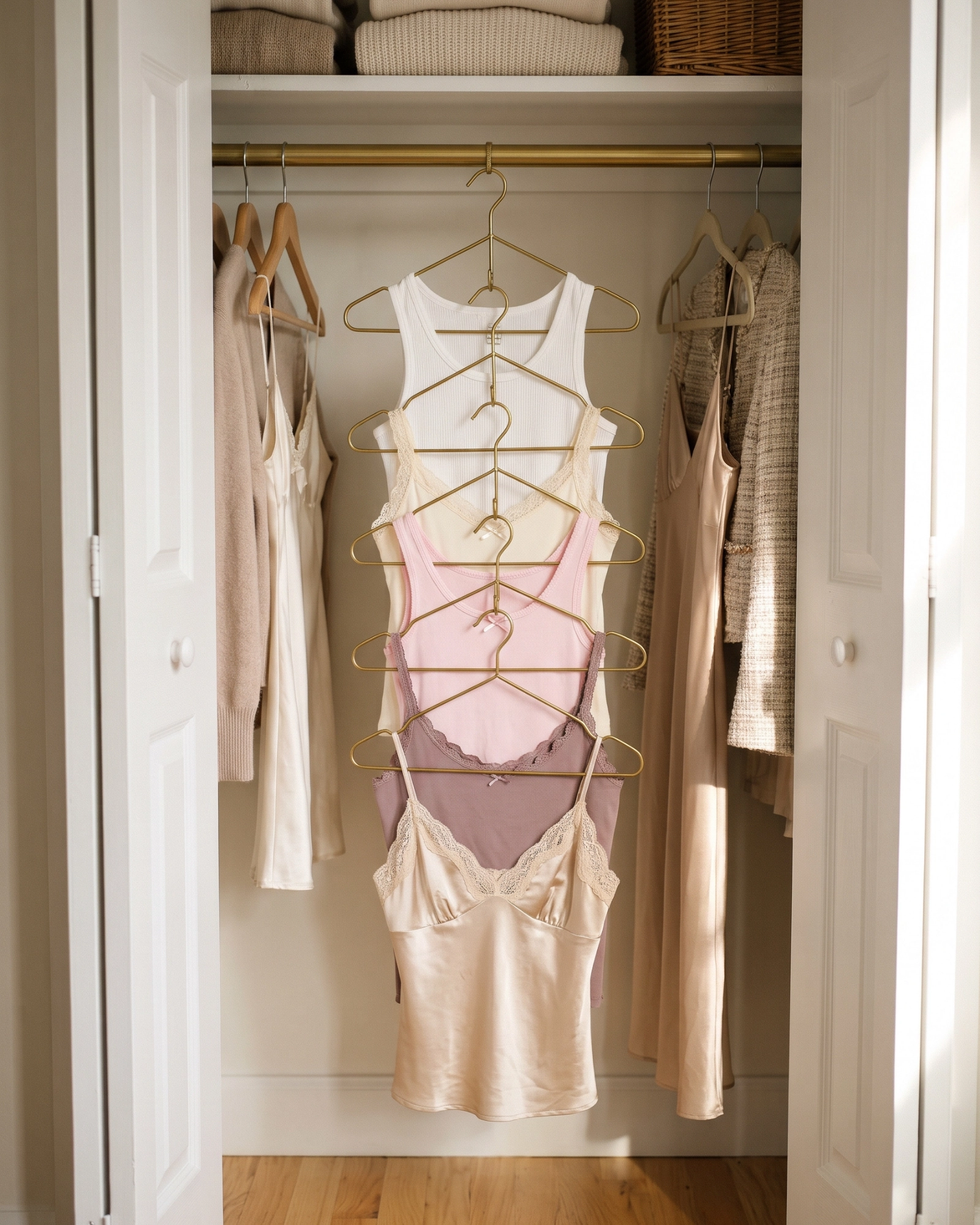
Cascading hangers hang several items vertically from a single spot on the rod. They work especially well for trousers, leggings, and tank tops, and they can hold four or five pieces in the width of one hanger.
Use them for groups of similar items you rotate through, like work pants or summer tanks, rather than for everything. Too many cascading hangers in one area can bunch up and make the rod sag, so spread them out.
7.Lift Shoes Off the Floor With a Slim Shoe Rack
 Save
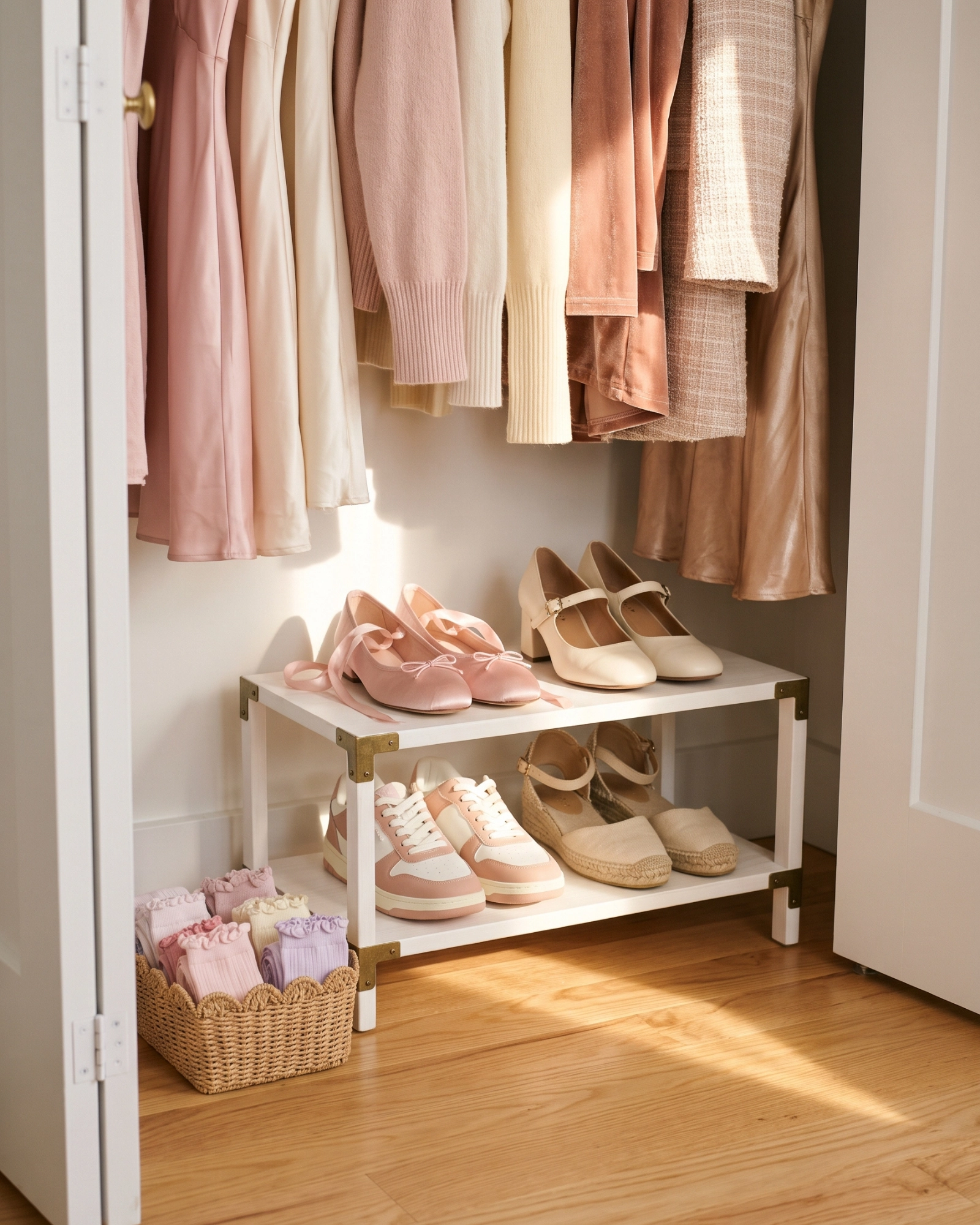
Shoes on the closet floor tend to become a tangle you have to dig through. A slim stackable shoe rack lifts them up, pairs them neatly, and frees the floor space underneath for a laundry basket or a bag bin.
Measure the floor width and the height under your lowest hanging clothes before you buy. Two short tiers often fit where one tall rack won't. Keep only in-season shoes in the closet, store the rest in a labeled bin on the top shelf, and give everyday sneakers a spot by the front door with these small entryway organization ideas.
How to Organize a Small Closet in One Afternoon
Do the ideas in this order and a small closet takes about an afternoon. Empty the closet and donate anything you haven't worn in a year. Swap to slim hangers, add the rod extender, and hang clothes by type. Then fill the top shelf with labeled bins, add shelf dividers for folded stacks, and finish with the door organizer and shoe rack.
To keep it working, do a quick seasonal swap twice a year: move off-season clothes into the top-shelf bins and bring the new season down to eye level. A few minutes of putting clothes away each night, as part of a 15-minute evening reset, keeps the floor from filling up again.
Frequently Asked Questions
How do I maximize space in a small closet?
Use the parts of the closet that usually go to waste: the space below short clothes (with a rod extender), the top shelf (with labeled bins), the back of the door (with an over-the-door organizer), and the floor (with a slim shoe rack). Slim hangers free up rod space too.
How can I organize a closet without drilling?
Rod extenders, over-the-door organizers, clip-on shelf dividers, cascading hangers, freestanding shoe racks, and storage bins all install without tools, so they're safe for most rentals.
Should sweaters be hung or folded in a small closet?
Fold them. Hanging heavy knits can stretch the shoulders, and folded stacks of five or six sweaters with shelf dividers take up less space than a row of hangers.
How often should I declutter my closet?
A quick edit every season works well. Turn all your hangers the same way, flip each one after you wear the item, and at the end of the season consider donating anything still facing the original direction.
Where do I put shoes if my closet is too small?
Keep in-season pairs on a slim rack on the closet floor or an over-the-door organizer, store off-season shoes in a labeled bin on the top shelf, and give everyday pairs a spot by the front door.